

 English
 русский
 عربى
عربى 中文简体
中文简体
Content
What Is a 304 Stainless Steel Flange
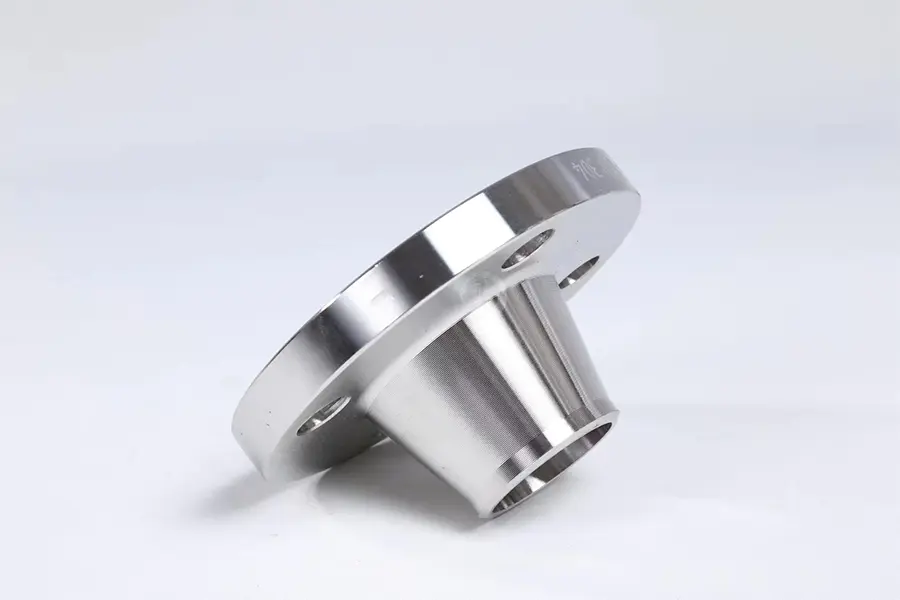
A 304 stainless steel flange is a piping component made from grade 304 austenitic stainless steel, used to connect pipes, valves, pumps, and other equipment in a piping system. Flanges allow sections of piping to be joined together using bolts rather than permanent welds, which makes maintenance, inspection, and future modifications significantly easier compared to fully welded pipe runs. The flange itself typically consists of a flat or raised face with evenly spaced bolt holes around its circumference, designed to mate with a matching flange on the connecting component, often with a gasket placed between the two surfaces to ensure a leak-tight seal.
Grade 304 is the most widely used austenitic stainless steel due to its strong balance of corrosion resistance, mechanical strength, and affordability relative to higher alloy grades. This combination makes 304 stainless steel flanges a common choice across food processing, water treatment, chemical handling, and general industrial piping applications.
Why 304 Stainless Steel Is Used for Flanges
Grade 304 stainless steel contains approximately 18 percent chromium and 8 percent nickel, an alloy composition that gives the material excellent resistance to oxidation and general corrosion in a wide range of environments. This corrosion resistance is particularly valuable in piping systems that handle water, mild chemicals, or food products, where carbon steel flanges would be prone to rust and contamination over time.
In addition to corrosion resistance, 304 stainless steel offers good formability and weldability, which simplifies manufacturing and allows flanges to be produced in a wide range of sizes and configurations. While 304 stainless steel is not the most corrosion resistant grade available, since alloys like 316 offer better performance in chloride-rich or highly acidic environments, its lower cost and broad suitability make it the default choice for many standard industrial and commercial applications.
Common Types of 304 Stainless Steel Flanges
Flanges are manufactured in several distinct styles, each suited to different installation methods and system requirements. The table below outlines the most commonly used types.
| Flange Type | Connection Method | Common Use |
| Weld Neck | Butt welded to pipe | High pressure and high temperature systems |
| Slip-On | Slides over pipe, fillet welded | General purpose, lower pressure applications |
| Blind | No bore, seals the end of a line | Closing pipe ends or providing access points |
| Threaded | Screwed onto threaded pipe | Small diameter lines where welding is impractical |
| Socket Weld | Pipe inserted and fillet welded | Small bore, high pressure piping |
Weld neck flanges are generally preferred for critical applications because the tapered hub provides better stress distribution and reduces the risk of failure under pressure or thermal cycling, while slip-on and threaded flanges offer simpler, faster installation for less demanding systems.
Understanding Pressure Classes and Ratings
Flanges are manufactured according to standardized pressure classes, most commonly defined by ANSI or ASME standards in the United States, with classes such as 150, 300, 600, 900, 1500, and 2500 indicating the maximum pressure the flange can safely handle at a given temperature. As temperature increases, the maximum allowable pressure for any given class decreases, since the material's mechanical strength reduces at elevated temperatures.
When selecting a 304 stainless steel flange, it is essential to consult the relevant pressure-temperature rating chart for the specific pressure class and confirm that the flange can handle both the maximum operating pressure and the maximum operating temperature of the system simultaneously, since exceeding either parameter can compromise the integrity of the connection.
How to Choose the Right Flange for Your Application
Match Size and Schedule to the Pipe
The flange's nominal pipe size and wall thickness schedule must match the pipe it will be welded or connected to in order to ensure proper alignment and a secure weld or fit. Ordering a flange with mismatched dimensions is one of the most common and costly mistakes in piping system procurement, often resulting in delays while correct components are sourced.
Confirm Pressure and Temperature Requirements
Before finalizing a flange selection, review the system's maximum operating pressure and temperature against the flange's rated pressure class at that specific temperature. Selecting a flange rated for standard conditions when the system actually operates at elevated temperatures can lead to gasket failure, leakage, or in severe cases, flange deformation under load.
Verify Gasket and Bolting Compatibility
The gasket material and bolting used with a 304 stainless steel flange should be compatible with both the process fluid and the operating temperature range. Mismatched gasket materials can degrade prematurely, while incompatible bolting, such as carbon steel bolts in a corrosive environment, can introduce galvanic corrosion issues at the joint.
Installation and Maintenance Tips
Proper installation practices help ensure that a 304 stainless steel flange performs reliably throughout its service life. Attention to bolt torque, alignment, and surface preparation during installation can prevent many common leak and failure issues down the line.
- Tighten bolts in a staggered, crisscross pattern rather than sequentially around the circumference to distribute load evenly
- Use a torque wrench to apply the manufacturer specified bolt torque rather than estimating tightness by feel
- Inspect flange faces for scratches, pitting, or debris before installation, since surface imperfections can prevent proper gasket sealing
- Periodically re-inspect bolted connections for signs of leakage or loosening, particularly after temperature cycling or system vibration
By understanding the available flange types, pressure ratings, and proper installation practices, engineers and maintenance personnel can confidently select and install 304 stainless steel flanges that deliver reliable, long term performance across a wide range of industrial piping applications.