

 English
 русский
 عربى
عربى 中文简体
中文简体
Content
- 1 Understanding 301 Stainless Steel Composition and Properties
- 2 Hot-Rolling Process and Manufacturing
- 3 Advantages of 301 Hot-Rolled Coil
- 4 Common Industrial Applications
- 5 Comparison with Other Stainless Steel Grades
- 6 Processing and Fabrication Considerations
- 7 Selection Criteria and Specification Guidelines
- 8 Storage and Handling Best Practices
301 stainless steel hot-rolled coil represents a versatile and widely utilized material in modern manufacturing and construction applications. This austenitic chromium-nickel stainless steel alloy offers an exceptional combination of strength, formability, and corrosion resistance that makes it indispensable across diverse industries. Understanding the unique characteristics, production processes, and practical applications of 301 hot-rolled coil enables engineers, procurement professionals, and manufacturers to make informed material selection decisions that optimize performance while managing costs effectively. This comprehensive guide explores everything you need to know about 301 stainless steel hot-rolled coil.
Understanding 301 Stainless Steel Composition and Properties
301 stainless steel belongs to the austenitic family of stainless steels, characterized by its face-centered cubic crystal structure that remains stable at room temperature. The alloy contains approximately 16-18% chromium and 6-8% nickel, with carbon content ranging from 0.15% maximum. This specific composition creates a material with lower nickel content compared to the more common 304 grade, resulting in distinct mechanical and physical properties that suit particular applications.
The chromium content forms a passive oxide layer on the surface, providing excellent corrosion resistance in most atmospheric conditions and many chemical environments. The reduced nickel content compared to 304 grade makes 301 less stable in its austenitic form, which paradoxically becomes an advantage. This relative instability allows the material to undergo strain-induced martensitic transformation during cold working, significantly increasing its strength and hardness while maintaining reasonable ductility.
Key Mechanical Properties
301 stainless steel hot-rolled coil exhibits impressive mechanical characteristics that distinguish it from other austenitic grades. In its annealed condition, the material demonstrates a tensile strength of approximately 515-620 MPa (75,000-90,000 psi) with yield strength around 205-310 MPa (30,000-45,000 psi). The elongation capability reaches 40-50% in standard testing, indicating excellent ductility for forming operations.
What sets 301 apart is its exceptional work-hardening rate. Through cold working processes, the tensile strength can increase dramatically to 1,275 MPa (185,000 psi) or higher in fully hardened conditions. This work-hardening characteristic allows manufacturers to achieve various strength levels by controlling the degree of cold reduction, creating materials ranging from quarter-hard to full-hard tempers suitable for different applications.
Hot-Rolling Process and Manufacturing
The hot-rolling process begins with stainless steel slabs or ingots heated to temperatures between 1100°C and 1250°C (2012°F-2282°F) in reheating furnaces. At these elevated temperatures, the steel becomes sufficiently plastic for deformation while maintaining structural integrity. The heated material then passes through a series of rolling mill stands that progressively reduce thickness while increasing length and width to desired dimensions.
During hot rolling, the material undergoes continuous reduction through multiple passes, with each pass decreasing thickness by controlled amounts. The process typically involves roughing mills that perform initial heavy reductions, followed by finishing mills that achieve final thickness specifications. Modern hot-rolling facilities use computer-controlled systems to maintain precise temperature, reduction rates, and rolling speeds that ensure consistent material properties throughout the coil.
Surface Finish Characteristics
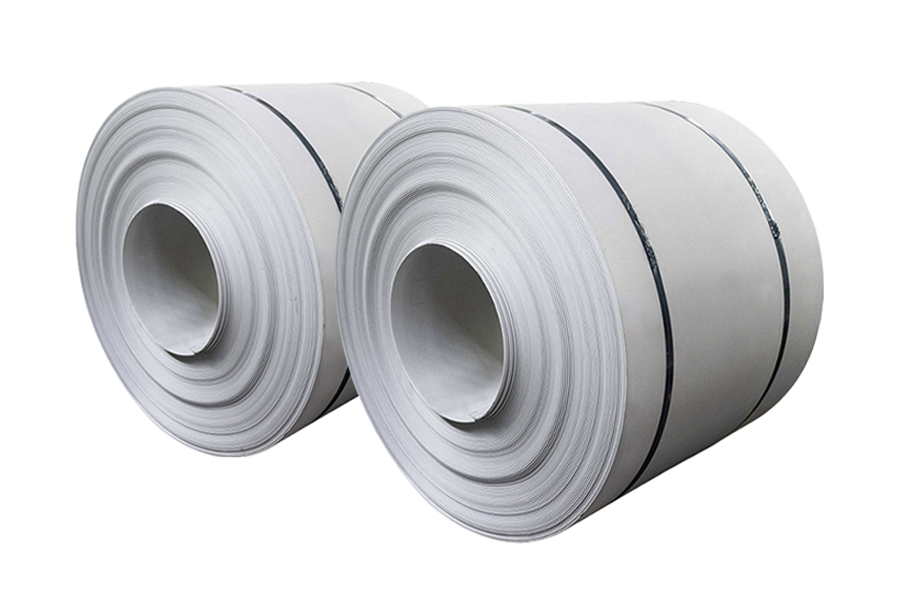
Hot-rolled 301 stainless steel coil features a characteristic scale-covered surface finish designated as No. 1 finish in industry standards. This oxide scale forms naturally during the high-temperature rolling process and subsequent cooling. The surface appears dark and rough compared to cold-rolled finishes, with the scale providing some protection during storage and transportation. Many applications utilize hot-rolled coil in its as-rolled condition, while others require descaling through pickling or mechanical methods before further processing.
The hot-rolled surface finish typically exhibits roughness values between 3-6 micrometers Ra, making it suitable for applications where smooth surfaces are not critical. For projects requiring improved appearance or cleanliness, descaling through acid pickling removes the oxide layer, revealing the bright metallic surface underneath. This pickled and oiled finish, designated as 2D, provides better corrosion resistance and prepares the material for painting or coating operations.
Advantages of 301 Hot-Rolled Coil
301 stainless steel hot-rolled coil offers numerous advantages that make it preferable for specific applications. The material combines the corrosion resistance expected from stainless steel with exceptional strength achievable through work hardening, creating opportunities for weight reduction and improved structural performance in demanding environments.
- Superior work-hardening capability enables achievement of very high strength levels through cold forming
- Excellent spring characteristics when hardened, ideal for spring and fastener applications
- Good corrosion resistance in atmospheric and mildly corrosive environments
- Cost-effective compared to higher nickel grades while maintaining performance
- Hot-rolled production offers thicker gauges suitable for structural applications
- Non-magnetic in annealed condition, becoming slightly magnetic when work-hardened
- Excellent formability in annealed state for complex shapes and deep drawing
- Maintains properties across wide temperature ranges from cryogenic to moderately elevated
Common Industrial Applications
Structural and Architectural Uses
The construction and architectural sectors utilize 301 hot-rolled coil extensively for structural components requiring both strength and corrosion resistance. The material serves in roof and wall cladding systems, structural framing members, and architectural trim where weather resistance and durability are essential. Its ability to maintain appearance and structural integrity in outdoor environments makes it valuable for building facades, canopies, and decorative elements that must withstand years of exposure to moisture, pollution, and temperature variations.
Railroad applications represent another significant structural use, with 301 hot-rolled coil forming railcar components, freight car panels, and transit vehicle structural members. The material's high strength-to-weight ratio allows engineers to reduce component weight while maintaining necessary structural performance, improving fuel efficiency and payload capacity in transportation applications.
Manufacturing and Industrial Equipment
Manufacturing facilities employ 301 hot-rolled coil in producing springs, clips, fasteners, and various hardware components that benefit from its work-hardening characteristics. The material's ability to achieve high strength through cold forming makes it ideal for producing resilient components that must withstand repeated stress cycles. Conveyor systems, material handling equipment, and industrial machinery incorporate 301 components where corrosion resistance and mechanical strength combine to extend service life in demanding production environments.
Food processing and pharmaceutical industries value 301 stainless steel for equipment construction where sanitary conditions, cleanability, and corrosion resistance are paramount. Processing tanks, mixing vessels, and material handling components fabricated from 301 hot-rolled coil resist chemical attack from cleaning agents while maintaining hygienic surfaces that prevent contamination.
Automotive and Transportation
The automotive sector increasingly incorporates 301 stainless steel hot-rolled coil in exhaust system components, structural reinforcements, and trim applications. The material's corrosion resistance extends component life despite exposure to road salt, moisture, and exhaust gases. Automotive manufacturers appreciate the weight savings achievable through using high-strength 301 instead of heavier carbon steel alternatives, contributing to improved fuel efficiency and reduced emissions.
- Exhaust system manifolds, pipes, and muffler components
- Structural reinforcement members in vehicle frames and chassis
- Seat frames and adjustment mechanisms requiring spring properties
- Trim pieces and decorative elements resisting environmental degradation
- Fuel system components requiring corrosion resistance
Comparison with Other Stainless Steel Grades
Understanding how 301 compares to other common stainless steel grades helps in making appropriate material selections for specific applications. Each grade offers distinct advantages based on composition and resulting properties.
| Property | 301 | 304 | 316 |
| Chromium Content | 16-18% | 18-20% | 16-18% |
| Nickel Content | 6-8% | 8-10.5% | 10-14% |
| Work-Hardening Rate | Very High | Moderate | Moderate |
| Corrosion Resistance | Good | Excellent | Superior |
| Maximum Strength | Very High | Moderate | Moderate |
| Relative Cost | Lower | Moderate | Higher |
| Best Use Case | High-strength applications | General purpose | Marine/chemical environments |
Processing and Fabrication Considerations
Forming and Bending
301 stainless steel hot-rolled coil in its annealed condition exhibits excellent formability, allowing complex shapes, deep draws, and severe bends without cracking or excessive springback. However, fabricators must account for the material's work-hardening behavior, which causes rapid strength increases during forming operations. Progressive forming operations should sequence bends and draws to prevent premature work hardening that could compromise subsequent forming steps or cause tooling damage.
When bending 301 hot-rolled coil, minimum bend radii depend on material thickness and temper condition. Annealed material typically allows bend radii as tight as 1-2 times material thickness for 90-degree bends, while work-hardened conditions require larger radii to prevent cracking. Proper die design with adequate clearances and smooth radii prevents surface damage and ensures consistent bend quality across production runs.
Welding Techniques
Welding 301 stainless steel hot-rolled coil requires techniques appropriate for austenitic stainless steels. Gas tungsten arc welding (GTAW/TIG) and gas metal arc welding (GMAW/MIG) produce high-quality joints with proper filler metal selection. ER308L or ER309L filler metals work well for most applications, with the slightly higher alloy content in 309L providing additional corrosion resistance in the weld zone.
Controlling heat input during welding is critical to minimize distortion and prevent carbide precipitation that could reduce corrosion resistance. Using lower amperage settings, faster travel speeds, and appropriate backing gases maintains weld quality while limiting heat-affected zone size. Post-weld cleaning removes heat tint and surface contamination, restoring full corrosion resistance to welded assemblies.
Machining Operations
Machining 301 stainless steel presents challenges due to its work-hardening characteristics and relatively high strength. Sharp cutting tools with proper geometry, adequate coolant application, and controlled feed rates prevent work hardening ahead of the cutting edge that increases tool wear and reduces machining efficiency. Carbide or high-speed steel tools with appropriate coatings extend tool life when machining 301 hot-rolled material.
Drilling, tapping, and threading operations require particular attention to prevent work hardening and galling. Using cutting fluids specifically formulated for stainless steel, maintaining sharp tools, and avoiding dwelling or rubbing minimizes these issues. Thread-forming operations should proceed continuously without stopping to prevent work hardening that makes completion difficult.
Selection Criteria and Specification Guidelines
Selecting 301 stainless steel hot-rolled coil for specific applications requires evaluating multiple factors to ensure material performance matches project requirements. Consider the operating environment, mechanical loads, temperature exposure, and required service life when making material decisions. Applications requiring maximum corrosion resistance in harsh chemical or marine environments may warrant higher-nickel grades like 304 or 316, despite 301's strength advantages.
Thickness requirements significantly influence coil selection, as hot-rolled production economically provides heavier gauges typically ranging from 3mm to 25mm or more. For thinner materials below 3mm, cold-rolled coil may offer better surface finish and dimensional tolerances. Review applicable industry standards including ASTM A240 or equivalent international specifications to ensure purchased material meets quality and performance requirements.
Quality Assurance and Testing
Reputable suppliers provide mill test reports documenting chemical composition, mechanical properties, and manufacturing parameters for each coil lot. These certificates verify compliance with specified standards and provide traceability throughout the supply chain. Critical applications may require additional testing including ultrasonic examination for internal defects, surface inspection for defects, and verification testing of mechanical properties.
- Chemical composition analysis via spectrometry confirming alloy content
- Tensile testing verifying strength, yield, and elongation properties
- Hardness testing ensuring consistency across coil width and length
- Surface inspection identifying defects requiring correction
- Dimensional verification confirming thickness and flatness tolerances
Storage and Handling Best Practices
Proper storage and handling of 301 stainless steel hot-rolled coil preserves material quality and prevents damage that could affect fabrication or performance. Store coils in dry, covered facilities protected from weather exposure, standing water, and temperature extremes. While stainless steel resists corrosion better than carbon steel, prolonged exposure to moisture can cause surface staining that requires additional cleaning before use.
When handling coils, use appropriate lifting equipment rated for coil weight, with padded or nylon slings that prevent surface damage. Avoid dragging coils across floors or stacking directly on concrete where moisture accumulation could occur. Maintain protective wrapping until ready for processing, and handle with clean gloves to prevent fingerprints and contamination that could affect surface appearance in visible applications. Following these practices ensures material reaches fabrication in optimal condition, ready to deliver expected performance in final applications.