

 English
 русский
 عربى
عربى 中文简体
中文简体
Content
- 1 How Stainless Steel Pipes Are Manufactured
- 2 Common Stainless Steel Grades Used in Pipes
- 3 Types of Stainless Steel Pipes by Shape and Form
- 4 Surface Finishes and What They Mean
- 5 Industry-Specific Applications of Stainless Steel Pipes
- 6 Key Specifications and Standards to Know
- 7 How to Choose the Right Stainless Steel Pipe
Stainless steel pipes are among the most widely used materials in industrial, commercial, and residential construction. Their corrosion resistance, strength, and long service life make them a preferred choice across plumbing, oil and gas, food processing, pharmaceutical, and structural applications. However, not all stainless steel pipes are the same. Understanding the different types — defined by manufacturing method, shape, grade, and finish — is essential for selecting the right pipe for any given job.
How Stainless Steel Pipes Are Manufactured
The manufacturing method of a stainless steel pipe has a direct impact on its mechanical properties, pressure tolerance, and suitability for different environments. There are two primary production methods: seamless and welded.
Seamless Stainless Steel Pipes
Seamless pipes are made by extruding a solid round billet of stainless steel through a piercing rod to create a hollow tube. Because there is no weld seam, the pipe has a uniform structure throughout its entire cross-section. This makes seamless pipes far more resistant to high pressure and extreme temperatures. They are the go-to choice for oil and gas pipelines, hydraulic systems, boiler tubes, and other high-stress applications where pipe failure can lead to catastrophic consequences.
Welded Stainless Steel Pipes
Welded pipes are manufactured by rolling flat stainless steel sheets into a cylindrical shape and welding the seam longitudinally or in a spiral. While they may seem structurally inferior to seamless pipes, modern welding technology and strict quality control have made welded pipes highly reliable for most standard applications. They are more cost-effective, available in larger diameters, and widely used in water supply systems, architectural projects, food processing equipment, and HVAC systems.
Common Stainless Steel Grades Used in Pipes
The grade of stainless steel determines its chemical composition, corrosion resistance, mechanical strength, and temperature tolerance. Choosing the wrong grade can lead to premature corrosion, structural failure, or contamination of the materials being transported. The following are the most commonly used grades in pipe manufacturing:
| Grade | Key Composition | Best For |
| 304 | 18% Cr, 8% Ni | General purpose, food & beverage, plumbing |
| 316 | 16% Cr, 10% Ni, 2% Mo | Marine, chemical, pharmaceutical industries |
| 321 | 18% Cr, 10% Ni + Ti | High-temperature applications, aerospace |
| 2205 Duplex | 22% Cr, 5% Ni, 3% Mo | Oil & gas, seawater, chloride environments |
| 410 | 11.5–13.5% Cr | Mild corrosion, structural, steam service |
Grade 304 is by far the most widely used, offering an excellent balance of corrosion resistance, workability, and cost. Grade 316 adds molybdenum for superior resistance to chloride-induced pitting and crevice corrosion, making it essential for marine and chemical environments. Duplex grades like 2205 offer nearly double the strength of austenitic grades while maintaining excellent corrosion resistance, making them ideal for demanding industrial applications.
Types of Stainless Steel Pipes by Shape and Form
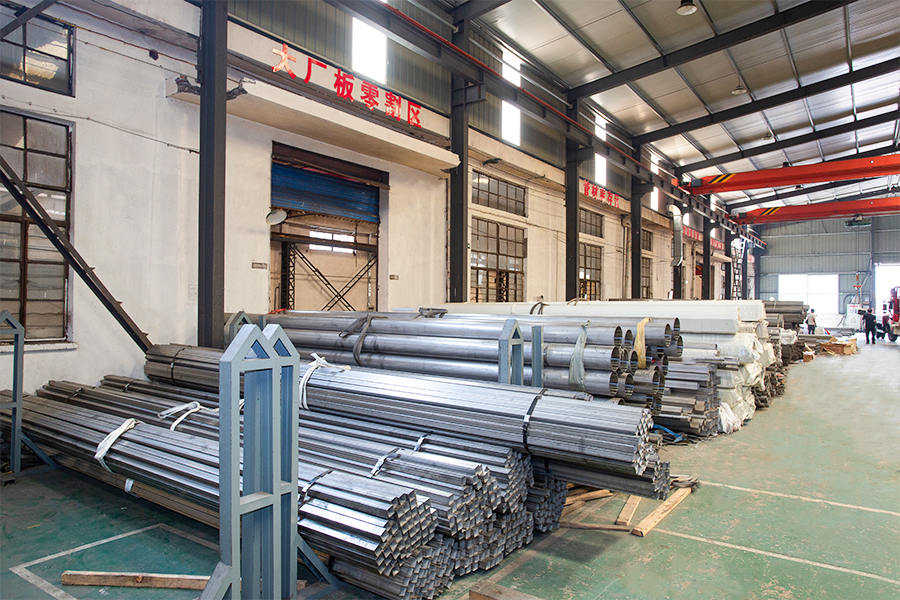
While cylindrical round pipes are the most common, stainless steel pipes are produced in several cross-sectional shapes to meet different structural and functional needs. Understanding these options helps engineers and contractors select the most efficient solution for their application.
- Round Pipes: The standard form used in fluid transport, gas lines, structural columns, and mechanical applications. Available in a wide range of diameters and wall thicknesses.
- Square Pipes: Commonly used in structural frameworks, furniture manufacturing, and construction applications where flat surfaces are needed for joining or welding.
- Rectangular Pipes: Often used in architectural railings, machine frames, and material handling systems, offering better load distribution along one axis.
- Oval and Decorative Pipes: Used primarily for handrails, furniture, and aesthetic interior applications where appearance matters as much as function.
Surface Finishes and What They Mean
The surface finish of a stainless steel pipe affects not only its appearance but also its corrosion resistance, hygienic performance, and ease of cleaning. Different industries have strict requirements for surface finish standards.
Common Finish Types
- 2B Finish: A smooth, slightly reflective finish achieved by cold rolling and light annealing. This is the most common finish for general industrial and food-grade applications.
- BA (Bright Annealed): A highly reflective, mirror-like finish used in pharmaceutical processing and decorative applications requiring the highest cleanliness standards.
- No. 4 Brushed Finish: A directional, satin texture commonly seen in kitchen equipment, handrails, and architectural elements. It hides scratches well and is easy to clean.
- Electro-Polished: A process that removes the outer layer of steel to produce an ultra-smooth, hygienic surface with superior corrosion resistance, widely used in the biotech and pharmaceutical industries.
Industry-Specific Applications of Stainless Steel Pipes
Different industries rely on stainless steel pipes for distinct reasons, and each environment demands specific combinations of grade, manufacturing method, and finish. Understanding these requirements helps procurement teams and engineers avoid costly specification errors.
Food and Beverage Industry
Hygienic piping systems in food and beverage production must be non-reactive, easy to sanitize, and resistant to cleaning chemicals. Grade 304 and 316 seamless or welded pipes with a 2B or electro-polished finish are standard. Pipe connections are often designed to be fully drainable to prevent microbial growth. Sanitary fittings and clamp-end connections are standard in this sector.
Oil and Gas Industry
This sector demands pipes that can withstand extreme temperatures, high pressures, and corrosive substances including hydrogen sulfide and chlorides. Seamless pipes in grades 316L, 317L, or duplex stainless steel are most commonly specified. Wall thickness is strictly controlled, and pipes must comply with standards such as ASTM A312 or ASTM A790 for duplex grades.
Construction and Architecture
In structural and decorative applications, welded stainless steel pipes in square, rectangular, or round forms are commonly used for handrails, balustrades, facades, and support columns. Grade 304 is preferred for interior applications, while 316 is recommended for coastal or urban environments with higher pollution levels. Mirror or brushed finishes are selected based on aesthetic intent.
Chemical and Pharmaceutical Industries
These industries require the highest level of material purity and corrosion resistance. Pipes must not react with the chemicals or biologics being transported. Low-carbon variants like 316L are preferred to avoid sensitization during welding. All internal surfaces must meet strict Ra (surface roughness) values, often below 0.8 µm, verified through documentation during manufacturing.
Key Specifications and Standards to Know
When purchasing stainless steel pipes, compliance with internationally recognized standards ensures quality, consistency, and safety. Buyers should always request mill test certificates confirming the pipe meets the specified standard. The most commonly referenced standards include:
- ASTM A312: Covers seamless, welded, and heavily cold-worked austenitic stainless steel pipes for high-temperature and corrosive service.
- ASTM A790: Applies to seamless and welded ferritic/austenitic (duplex) stainless steel pipes for general corrosive service.
- EN 10217-7: European standard for welded stainless steel pressure pipes used in technical applications.
- ASME B36.19: Defines the dimensional standards for stainless steel pipes including outer diameter and wall thickness schedules.
How to Choose the Right Stainless Steel Pipe
Selecting the correct stainless steel pipe requires evaluating several interconnected factors simultaneously. There is rarely a single correct answer — the optimal choice balances performance, longevity, and budget within the context of the application.
Start by identifying the operating conditions: What fluid or gas will the pipe carry? What are the temperature and pressure ranges? Is the environment exposed to chlorides, acids, or other corrosive agents? These answers will guide you toward the appropriate grade. Next, consider the mechanical demands — high-pressure or dynamic-load applications require seamless construction, while standard flow systems can reliably use welded pipes at a lower cost.
Don't overlook regulatory and hygiene requirements. Food, pharmaceutical, and medical applications demand certified materials with documented traceability and specific surface finishes. Finally, factor in weldability, availability in your region, and long-term maintenance costs. A slightly more expensive grade upfront can result in dramatically lower lifecycle costs if it avoids premature corrosion or replacement.
By understanding the distinctions between pipe types — whether by manufacturing method, alloy grade, shape, finish, or application standard — engineers and buyers can make confident, well-informed decisions that ensure safety, compliance, and performance for years to come.