

 English
 русский
 عربى
 中文简体

Content
- 1 Why 316 Earns Its Place
- 2 What a 316 Stainless Steel Pipe Fittings Factory Actually Controls
- 3 Fitting Types, Standards, and the Details That Matter
- 4 From Drawing to Delivery: When Standard Fittings Are Not Enough
- 5 Choosing a Factory: Questions Worth Asking
- 6 Quality, Stock, and Lead Time in the Real World
- 7 Let's Get Specific About Your Project
316 stainless steel pipe fittings rarely get the spotlight until a line has to be assembled, inspected, and signed off. Then the small details start to matter: the elbow angle, the flange face, the heat number, the weld prep, and the surface finish. Buyers searching for a 316 stainless steel pipe fittings factory are usually not shopping for one isolated part. They are looking for a supply partner who can keep a project moving without creating surprises at the joint.
Why 316 Earns Its Place
Type 316 adds molybdenum to the familiar stainless steel formula, which improves resistance to pitting and crevice corrosion in chloride-bearing environments. That is why 316 fittings appear in chemical processing, coastal installations, food and beverage lines, pharmaceutical utilities, water treatment, and marine-adjacent equipment. The low-carbon 316L version is often selected where welded joints must retain corrosion resistance without the risk of sensitization.
The grade is not a universal answer to every corrosive medium, and it is not always necessary where 304 would do the job. A sensible selection conversation considers the fluid, concentration, temperature, cleaning regime, and expected service life. A good factory should be comfortable asking those questions rather than simply quoting the lowest-cost fitting on the list.
What a 316 Stainless Steel Pipe Fittings Factory Actually Controls
At the factory level, quality begins before the first cut. Incoming plate, coil, or tube should be checked for grade, heat number, and condition. Material certificates are useful, but they are stronger when paired with practical verification such as positive material identification. From there, cutting, forming, machining, welding, heat treatment, pickling, passivation, and inspection all influence whether the finished fitting matches the drawing and the service duty.
Even a standard 90-degree elbow has a surprising number of variables. Wall thickness, center-to-face dimensions, angle accuracy, ovality, weld seam quality, and surface finish can all affect installation speed and long-term leak risk.
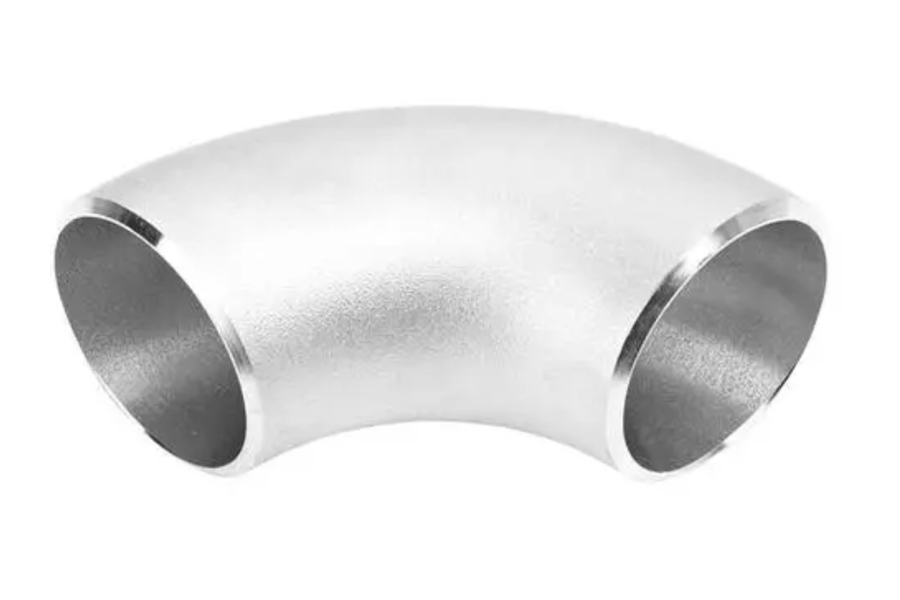 Stainless Steel 45°, 90° and 18° ElbowsStainless steel elbows in 304, 304L, and 316L grades, available as 45°, 90°, and 18° fittings for pipeline direction changes and fluid-control connections.View Product →
A capable shop keeps those variables under control with written procedures, calibrated tools, and operators who understand what happens downstream. Our own technology capabilities are organized around that practical view: interpret the drawing correctly, control the process, and inspect the features that matter instead of relying on appearance alone.
Welding deserves particular attention. For 316 fittings, the welding procedure, filler selection, purge control, and interpass temperature all affect corrosion resistance. Pickling and passivation after welding can restore a clean passive layer, but they cannot correct poor weld preparation or contaminated surfaces. That is why experienced buyers ask about process discipline, not just final shine.
Fitting Types, Standards, and the Details That Matter
Most projects begin with a familiar bill of materials. Elbows change direction, tees create branches, reducers transition line sizes, and flanges connect to equipment, valves, or other piping sections. The standard cited on the drawing is only the starting point; the factory still has to translate it into dimensions, material condition, marking, and inspection criteria that the installer can verify.
| Fitting form | Typical standards | Where it earns its keep |
|---|---|---|
| 90 or 45 degree elbow | ASME B16.9, ASTM A403, EN 10253 | Direction changes in process, utility, and sanitary lines |
| Equal or reducing tee | ASME B16.9, MSS SP-43 | Branch connections where flow splits or combines |
| Concentric or eccentric reducer | ASME B16.9, ASTM A403 | Line-size transitions; eccentric versions help with drainage |
| Flange, including custom forms | ASME B16.5, ASTM A182, customer drawings | Equipment, valve, and piping connections or jacketed assemblies |
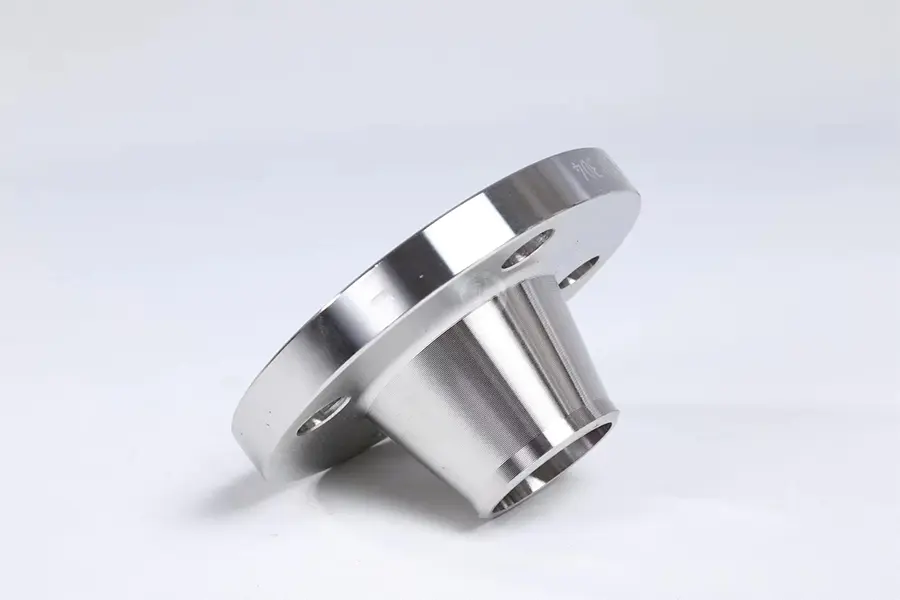 Stainless Steel Flanges for Piping ConnectionsStainless steel flanges in flat welded, butt welded, socket welded, threaded and loose sleeve types for connecting pipes, valves and equipment in piping assemblies.View Product →
Flanges are a good example of why dimensions matter. A raised face height, bolt circle, bore match, or taper that is slightly off can turn a straightforward bolted connection into a field problem. When the fitting is part of a jacketed or custom assembly, the complexity increases further, and the factory needs to consider both the pressure boundary and the installation sequence.
From Drawing to Delivery: When Standard Fittings Are Not Enough
Many industrial lines outgrow the catalog. A powder-handling system may need cyclone ducts and connecting pipework. A tank or heat exchanger may require custom flanges, jacket connections, or welded assemblies. A marine exhaust application may call for large, thick-walled sections that must fit around existing equipment. These are no longer simple fitting purchases; they are fabrication projects with fitting logic at their core.
In custom work, the drawing review is where most risk is removed. The factory should confirm material grade, thickness, mating dimensions, weld accessibility, surface treatment, inspection points, and packing strategy before production begins. A short clarification early is cheaper than a shipment that arrives with a flange bolt pattern facing the wrong direction. Our custom fabrication work follows that discipline: understand the service, check the fit, and build to the agreed inspection plan.
Choosing a Factory: Questions Worth Asking
Because 316 fittings often sit in demanding service, supplier selection should go beyond price per piece. The following questions help separate a reliable factory from a trading operation that simply forwards the order.
- Can you show heat-number traceability and material certificates for the exact batch?
- Will incoming material be verified by positive material identification or another agreed check?
- Which welding procedures and welder qualifications apply to the fitting?
- How are angles, center-to-face dimensions, flange faces, bore alignment, and surface finish inspected?
- What non-destructive testing or pressure testing is appropriate for the service conditions?
- How will the fittings be marked, protected, and packed for domestic or export delivery?
A 316 stainless steel pipe fittings factory should be able to answer these questions clearly and consistently. Vague answers may not mean the supplier is poor, but they do make risk harder to manage.
Quality, Stock, and Lead Time in the Real World
Lead time is rarely a single number. Standard fittings may move quickly when material is in stock, while custom assemblies depend on drawing approval, material availability, machining, welding, inspection, and finishing. Our material warehouse holds 20,000 tons of coil stock, which provides useful raw-material support and helps shorten the front end of many projects. It does not replace finished fitting inventory, but it gives production a more stable starting point.
Quality and delivery are not opposites. They are both outcomes of planning. A realistic factory gives inspection the time it needs, protects finished surfaces during handling, and packs fittings so that flanges and machined faces arrive without damage. That kind of experience is quiet, but it shows up on installation day.
Let's Get Specific About Your Project
Send us your fitting list, material grade, applicable standards, drawings, and service conditions. We will review the details, point out anything that needs clarification, and help you move from a parts inquiry to a practical production plan. You can reach our team through the contact page and share the requirements that matter most.