

 English
 русский
 عربى
عربى 中文简体
中文简体
Content
- 1 What Is Hastelloy and Why Does It Matter?
- 2 How Is Hastelloy Alloy Sheet Manufactured?
- 3 Key Grades of Hastelloy Sheet and Their Composition
- 4 The Core Benefits of Hastelloy Alloy Sheet
- 5 Industries and Applications Where Hastelloy Sheet Excels
- 6 Hastelloy Sheet vs. Stainless Steel: A Practical Comparison
What Is Hastelloy and Why Does It Matter?
Hastelloy is a registered trademark for a family of high-performance nickel-based superalloys developed and produced by Haynes International. These alloys are engineered specifically to withstand extreme environments — including highly corrosive chemical media, elevated temperatures, and oxidizing or reducing atmospheres — where conventional stainless steels and carbon steels would rapidly fail. The name "Hastelloy" has become widely recognized across industries including chemical processing, aerospace, nuclear energy, pollution control, and oil and gas as a benchmark for material reliability under stress.
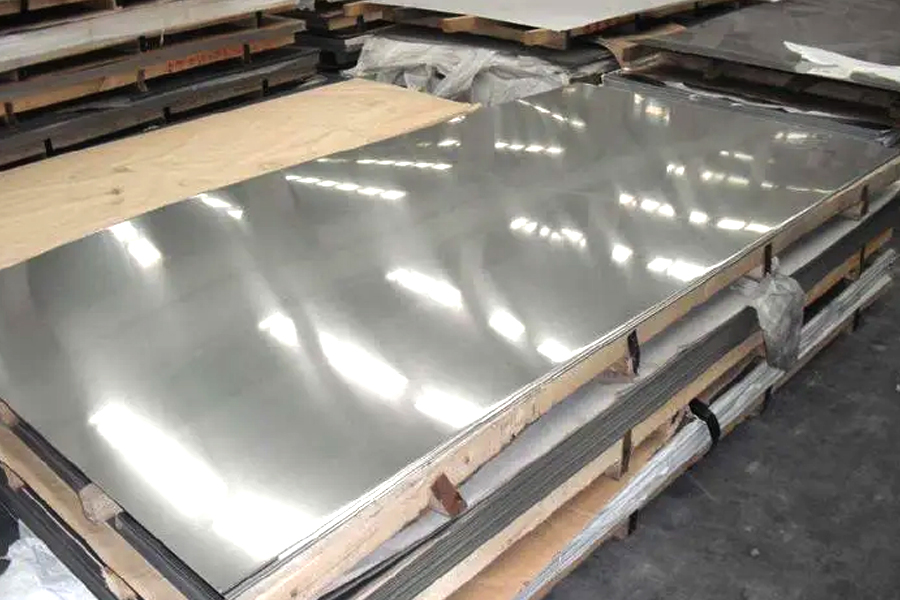
Among the various product forms available, Hastelloy alloy sheets are among the most versatile and widely specified. They serve as the base material for fabricated equipment including reactors, heat exchangers, scrubbers, piping systems, and storage tanks. Understanding how these sheets are manufactured and what advantages they deliver helps engineers, procurement teams, and plant managers make informed decisions when selecting materials for critical applications.
How Is Hastelloy Alloy Sheet Manufactured?
The manufacturing of Hastelloy alloy sheet is a multi-stage metallurgical process that demands precise control at every step. The goal is to produce flat-rolled material with consistent chemistry, mechanical properties, and surface integrity. Here is a detailed breakdown of the key production stages.
Raw Material Selection and Melting
The process begins with carefully selected raw materials, primarily nickel along with alloying elements such as molybdenum, chromium, iron, cobalt, tungsten, and trace amounts of carbon, manganese, silicon, and other elements depending on the specific grade. These materials are melted in a vacuum induction melting (VIM) furnace, which allows precise control of the alloy chemistry while preventing contamination from atmospheric gases such as oxygen and nitrogen. VIM is critical for achieving the tight elemental tolerances that define each Hastelloy grade. The resulting ingot is then typically remelted using vacuum arc remelting (VAR) or electroslag remelting (ESR) to further refine grain structure, reduce segregation, and eliminate internal defects — producing a homogenous, high-integrity starting billet.
Hot Rolling
The refined ingot or slab is then heated to elevated temperatures — typically in the range of 1100°C to 1230°C depending on the alloy grade — and passed through a series of rolling mills. Hot rolling reduces the thickness of the material progressively while refining the grain structure and improving mechanical uniformity. For Hastelloy, hot rolling must be performed within carefully controlled temperature windows; if the metal is rolled at too low a temperature, it becomes excessively hard and prone to cracking, while rolling at too high a temperature can cause grain growth or surface oxidation. Intermediate annealing steps may be applied between rolling passes to relieve internal stress and maintain workability.
Cold Rolling
After hot rolling, the sheet may undergo cold rolling to achieve tighter thickness tolerances, improved surface finish, and enhanced flatness. Cold rolling is performed at room temperature using precision rolling mills and progressively reduces the sheet to the specified gauge. Because Hastelloy alloys work-harden rapidly, cold rolling must be performed in controlled increments with regular annealing cycles between passes. This prevents the buildup of excessive residual stress and maintains the ductility required for subsequent fabrication operations such as forming, bending, and welding.
Annealing and Heat Treatment
Solution annealing is a critical final heat treatment step for Hastelloy sheet. The material is heated to a specific temperature (for example, approximately 1120°C for Hastelloy C-276) and held for a defined period before rapid quenching in water or air. This dissolves any carbide precipitates or secondary phases that may have formed during rolling and restores the alloy to a fully homogenous, corrosion-resistant microstructure. Proper annealing is essential — inadequately annealed Hastelloy sheet can exhibit sensitization and significantly reduced corrosion resistance, particularly in grain boundary regions.
Surface Finishing and Inspection
Hastelloy sheet is typically supplied with a No. 1 (hot rolled, annealed, and descaled), No. 2B (cold rolled, annealed, pickled), or polished finish depending on the application requirements. Pickling with acid solutions removes oxide scale from the surface and restores passive film integrity. Each sheet is subject to rigorous dimensional inspection, ultrasonic testing for internal defects, and chemical verification via spectroscopic analysis. Many manufacturers also perform tensile testing and hardness verification on each heat lot to confirm compliance with applicable standards such as ASTM B575 and ASTM B906.
Key Grades of Hastelloy Sheet and Their Composition
Several Hastelloy grades are available in sheet form, each engineered for a specific set of service conditions. The following table summarizes the most commonly used grades and their primary alloying elements:
| Grade | Primary Alloying Elements | Key Characteristics |
| Hastelloy C-276 | Ni, Mo (16%), Cr (15%), W (4%), Fe | Excellent resistance to pitting, crevice corrosion, and oxidizing acids |
| Hastelloy C-22 | Ni, Cr (22%), Mo (13%), W (3%), Fe | Superior resistance to mixed acid environments and oxidizing media |
| Hastelloy B-3 | Ni, Mo (28%), Cr (1%), Fe, Co | Outstanding resistance to hydrochloric acid at all concentrations |
| Hastelloy X | Ni, Cr (22%), Fe (18%), Mo (9%), Co | High-temperature oxidation resistance up to 1200°C; used in aerospace |
| Hastelloy G-30 | Ni, Cr (30%), Fe (15%), Mo (5%), Co, W | Excellent performance in phosphoric and sulfuric acid environments |
The Core Benefits of Hastelloy Alloy Sheet
Hastelloy alloy sheets deliver a range of performance benefits that justify their premium cost in demanding service environments. These benefits are the direct result of the alloy's carefully engineered composition and the rigorous manufacturing process applied to produce the sheet product.
Exceptional Corrosion Resistance
The most defining characteristic of Hastelloy sheet is its ability to resist corrosion in environments that destroy lesser materials. The high molybdenum content in grades such as C-276 and B-3 provides resistance to pitting and crevice corrosion in chloride-bearing environments. Chromium contributes to resistance against oxidizing acids such as nitric and chromic acids. Tungsten additions in C-276 and C-22 further enhance resistance to localized attack. This multi-element approach allows Hastelloy sheet to remain passive across a remarkably broad range of chemical media including hydrochloric acid, sulfuric acid, phosphoric acid, wet chlorine gas, and hypochlorite solutions — conditions where 316L stainless steel would fail within hours or days.
High-Temperature Strength and Oxidation Resistance
Hastelloy alloys retain their mechanical strength and structural integrity at temperatures where most engineering alloys soften and degrade. Hastelloy X sheet, for instance, maintains useful strength at temperatures up to 1200°C and exhibits excellent resistance to oxidizing, reducing, and carburizing atmospheres at elevated temperatures. This makes Hastelloy sheet indispensable in gas turbine combustion chambers, industrial furnace components, heat treating equipment, and reactor internals operating under thermally demanding conditions.
Resistance to Stress Corrosion Cracking
Stress corrosion cracking (SCC) is a failure mode that affects many austenitic stainless steels when exposed to chloride environments under tensile stress. Hastelloy alloys, with their high nickel base, are highly resistant to chloride-induced SCC — a critical advantage in applications such as offshore equipment, desalination plants, and chemical reactors where both chlorides and mechanical stress are present. This resistance significantly extends component service life and reduces the risk of catastrophic failure.
Weldability and Fabrication Flexibility
Despite their high alloy content, most Hastelloy sheet grades offer good weldability using standard processes such as GTAW (TIG), GMAW (MIG), and SMAW. The low carbon content of grades like C-276 minimizes carbide precipitation in the heat-affected zone during welding, preserving corrosion resistance without the need for post-weld heat treatment in most applications. Hastelloy sheet can also be formed, bent, and machined using conventional equipment, though the work-hardening rate requires appropriate allowances in tooling and process design.
Industries and Applications Where Hastelloy Sheet Excels
The combination of corrosion resistance, high-temperature strength, and fabricability makes Hastelloy alloy sheet the material of choice across several demanding industries:
- Chemical processing: Reactor vessels, distillation columns, heat exchangers, and piping systems handling aggressive acids, solvents, and process fluids where contamination or failure is unacceptable.
- Flue gas desulfurization (FGD): Scrubber systems in power plants that remove sulfur dioxide from exhaust gases involve wet, acidic, and chloride-rich environments that demand Hastelloy C-276 or C-22 sheet linings.
- Pharmaceutical manufacturing: Equipment used in drug synthesis must resist contamination from aggressive solvents and acids while meeting stringent hygiene standards — Hastelloy sheet provides both chemical inertness and cleanability.
- Aerospace and defense: Hastelloy X sheet is specified for combustion liners, transition ducts, and afterburner components in jet engines where sustained high-temperature performance is required.
- Nuclear energy: The stability of Hastelloy alloys under radiation and their resistance to corrosion in reactor coolant environments make them suitable for nuclear waste processing and reactor component fabrication.
- Oil and gas: Downhole components, sour gas processing equipment, and subsea applications where hydrogen sulfide, carbon dioxide, and chlorides coexist in high-pressure, high-temperature conditions.
Hastelloy Sheet vs. Stainless Steel: A Practical Comparison
Engineers often evaluate Hastelloy sheet against 316L or duplex stainless steel grades when specifying materials for corrosive service. The following comparison highlights the key differences:
- Corrosion resistance: Hastelloy C-276 significantly outperforms 316L stainless in HCl, H₂SO₄, and mixed acid environments as well as in high-chloride media where 316L suffers pitting and crevice corrosion.
- Temperature performance: Hastelloy maintains strength and oxidation resistance at temperatures well beyond the practical limit of most stainless steel grades.
- SCC resistance: Nickel-rich Hastelloy alloys are immune to chloride-induced stress corrosion cracking, a common failure mode in austenitic stainless steels.
- Cost: Hastelloy sheet carries a significantly higher material cost than stainless steel. However, when total lifecycle cost is considered — including reduced downtime, fewer replacements, and lower maintenance — Hastelloy frequently proves more economical in severe service conditions.
Hastelloy alloy sheet is not simply a premium material — it is an engineering solution. For applications where chemical attack, extreme heat, or stress corrosion represent genuine operational risks, specifying Hastelloy sheet is often the most reliable path to long-term equipment integrity, process safety, and reduced total cost of ownership. Its demanding manufacturing process, combining vacuum melting, precision rolling, and controlled heat treatment, is what underpins the consistency and performance that industries worldwide depend on.