

 English
 русский
 عربى
عربى 中文简体
中文简体
Content
- 1 What Are Stainless Steel Plates and How Are They Produced?
- 2 Major Stainless Steel Grades Used in Plate Form
- 3 Stainless Steel Plate Grade Comparison
- 4 Surface Finishes for Stainless Steel Plates and Their Applications
- 5 Key Industries and Applications for Stainless Steel Plates
- 6 Fabricating and Cutting Stainless Steel Plates
- 7 How to Source and Specify Stainless Steel Plates Correctly
What Are Stainless Steel Plates and How Are They Produced?
Stainless steel plates are flat-rolled steel products with a thickness generally exceeding 3 mm and a width typically ranging from 600 mm to over 3,000 mm, manufactured from iron alloyed with a minimum of 10.5 percent chromium by weight — the critical threshold at which a passive chromium oxide layer forms spontaneously on the steel surface, providing the corrosion resistance that defines stainless steel as a material category. Below this chromium content, the protective passive layer does not form reliably and the material behaves as conventional carbon or alloy steel. Above it, the self-repairing oxide film continuously regenerates when scratched or damaged in the presence of oxygen, giving stainless steel plates their exceptional resistance to rust, staining, and chemical attack in environments that would rapidly degrade ordinary steel.
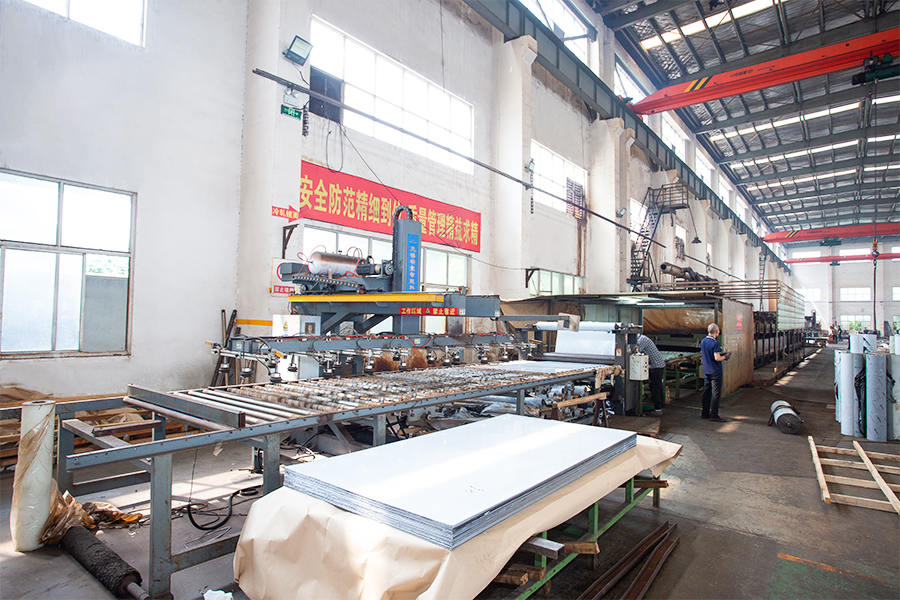
The production of stainless steel plates begins with electric arc furnace melting of iron scrap and alloying elements — chromium, nickel, molybdenum, titanium, and others depending on the grade — followed by argon oxygen decarburization (AOD) to reduce carbon content to the very low levels required for most stainless grades. The refined steel is continuously cast into slabs, then hot-rolled through successive rolling mill passes to reduce thickness to the target dimension. For plate thicknesses above approximately 6 mm, hot rolling alone is sufficient and the plate is supplied in the hot-rolled condition after annealing and pickling to remove the mill scale and restore the passive surface layer. Thinner plates — those approaching sheet dimensions of 3 to 6 mm — may undergo additional cold rolling passes to achieve tighter thickness tolerances and improved surface finish. The final heat treatment, typically solution annealing at temperatures between 1,000°C and 1,150°C followed by rapid quenching, dissolves any carbide precipitates that formed during rolling and restores the fully austenitic or ferritic microstructure required for optimal corrosion resistance and mechanical properties.
Major Stainless Steel Grades Used in Plate Form
The stainless steel plate market encompasses dozens of recognized grades across four major microstructural families — austenitic, ferritic, duplex, and martensitic — each engineered for specific combinations of corrosion resistance, mechanical strength, toughness, and weldability. For most industrial and structural applications, a relatively small number of grades account for the majority of tonnage consumed.
Austenitic Grades: 304, 304L, 316, and 316L
Austenitic stainless steel plates — stabilized by nickel additions of 8 to 12 percent — are the most widely used stainless plate products globally, accounting for approximately 70 percent of all stainless steel consumption. Grade 304 (18% chromium, 8% nickel) is the workhorse of the family, offering excellent corrosion resistance in atmospheric and mildly corrosive environments, outstanding formability, and good weldability without post-weld heat treatment in most applications. Grade 316 adds 2 to 3 percent molybdenum to the 304 composition, which dramatically improves resistance to pitting corrosion caused by chloride ions — the dominant corrosion mechanism in marine, coastal, and chemical processing environments. The "L" variants — 304L and 316L — have reduced carbon content (maximum 0.03% vs. 0.08% in standard grades) that prevents sensitization during welding, making them the standard specification for welded fabrications where the heat-affected zone must retain full corrosion resistance without post-weld annealing.
Duplex Grades: 2205 and 2507
Duplex stainless steel plates have a two-phase microstructure of roughly equal proportions of austenite and ferrite, produced through higher chromium (22 to 25%) and nitrogen additions combined with moderate nickel content (4 to 7%). This microstructure gives duplex grades approximately twice the yield strength of standard austenitic grades — typically 450 to 550 MPa versus 200 to 250 MPa for 316L — enabling significant weight reduction through thinner plate gauges in pressure vessel, storage tank, and structural applications without sacrificing corrosion resistance. Grade 2205 (22% Cr, 5% Ni, 3% Mo) is the most widely used duplex grade, offering superior chloride stress corrosion cracking resistance compared to 316L — a critical advantage in hot, saline process environments where austenitic grades are susceptible to stress corrosion cracking. Grade 2507 (super duplex, 25% Cr, 7% Ni, 4% Mo) extends this resistance further for the most aggressive offshore and chemical processing environments.
Ferritic and Martensitic Grades
Ferritic stainless steel plates — containing 10.5 to 30% chromium without significant nickel — offer good corrosion resistance at lower cost than austenitic grades because they eliminate the expensive nickel addition. Grade 430 (17% Cr) is the most common ferritic plate grade, used in food processing equipment, automotive trim components, and decorative architectural applications where the cost premium of nickel-bearing grades is not justified by the service environment. Martensitic grades — including 410 and 420 — are hardened by heat treatment to produce high-strength, wear-resistant plates used in cutting tools, pump components, and valve bodies, though their corrosion resistance is significantly lower than austenitic or ferritic grades.
Stainless Steel Plate Grade Comparison
The following table provides a direct comparison of the most commonly specified stainless steel plate grades across key compositional and performance parameters to assist in grade selection for specific applications:
| Grade | Cr % | Ni % | Mo % | Yield Strength | Corrosion Resistance |
| 304 / 304L | 18 | 8–10 | — | ~205 MPa | Good — general purpose |
| 316 / 316L | 16–18 | 10–14 | 2–3 | ~205 MPa | Very good — chloride resistant |
| 321 | 17–19 | 9–12 | — | ~205 MPa | Good — high-temp stabilized |
| 2205 Duplex | 22 | 5 | 3 | ~450 MPa | Excellent — high chloride resistance |
| 430 | 16–18 | — | — | ~205 MPa | Moderate — no nickel |
Surface Finishes for Stainless Steel Plates and Their Applications
The surface finish of a stainless steel plate affects not only its appearance but also its corrosion resistance, cleanability, and suitability for specific fabrication processes. The mill produces plates in several standard finish designations, and additional finishing operations can be applied to meet specific requirements.
- No. 1 (Hot Rolled, Annealed and Pickled): The standard mill finish for hot-rolled plates above 3 mm thickness — a dull, slightly rough surface produced by the hot-rolling process and the acid pickling that removes mill scale. The No. 1 finish is not decorative but provides a clean, passive surface suitable for structural fabrication, pressure vessels, and industrial equipment where appearance is not a factor.
- No. 2B (Cold Rolled, Smooth): A smooth, matte finish produced by cold rolling followed by annealing and skin pass rolling, standard for thinner plates approaching sheet gauge. The 2B finish is the most widely used stainless finish for food processing equipment, pharmaceutical plant, and applications requiring smooth, easily cleaned surfaces without requiring a polished appearance.
- No. 4 (Brushed/Directional): A unidirectional brushed finish produced by abrasive belt grinding to approximately 150 to 180 grit, creating visible parallel lines across the surface. The No. 4 finish is the standard for decorative architectural applications — elevator panels, kitchen equipment, and wall cladding — where a clean, professional appearance is required without the high cost of a polished finish.
- No. 8 (Mirror Polish): A highly reflective mirror finish produced by progressive polishing to very fine abrasive grades followed by buffing. No. 8 finish is used in decorative architectural features, jewelry and display cases, and applications requiring maximum visual impact. It is the most expensive finish to produce and the most susceptible to fingerprinting and scratching in service.
- Shot Blasted (Textured): A uniform matte texture produced by propelling steel shot or grit at the plate surface, creating a consistent non-directional texture with improved grip and light-scattering properties. Shot-blasted stainless plate is used in anti-slip flooring applications, walkways, and industrial platforms where both corrosion resistance and slip resistance are required simultaneously.
Key Industries and Applications for Stainless Steel Plates
Stainless steel plates serve an exceptionally broad range of industries and application types, each leveraging a specific combination of the material's corrosion resistance, strength, hygienic surface properties, or high-temperature performance.
Chemical Processing and Petrochemicals
Chemical processing plants use stainless steel plates extensively in pressure vessels, reactors, heat exchanger shells, storage tanks, and piping flange components that handle corrosive process fluids including acids, alkalis, chlorinated solvents, and saline solutions at elevated temperatures and pressures. Grade 316L is the minimum standard for most chemical processing duties, while duplex 2205 and super austenitic grades like 904L or 254 SMO are specified for the most aggressive chloride-containing environments where 316L would experience pitting or crevice corrosion within its design service life. Pressure vessel fabrication from stainless plate is governed by design codes including ASME Section VIII, PED (Pressure Equipment Directive) in Europe, and equivalent national standards, all of which specify minimum material properties and welding procedure requirements that influence grade and thickness selection.
Food Processing and Pharmaceutical Manufacturing
The food processing and pharmaceutical industries use stainless steel plates for processing vessel fabrication, conveyor systems, work surfaces, and hygienic enclosures because stainless steel's smooth, non-porous surface is resistant to bacterial colonization, easily cleaned to validated sanitary standards, and compatible with the caustic cleaning chemicals (CIP — clean-in-place — systems using sodium hydroxide and nitric acid) routinely used in these industries. Grade 316L is the standard specification for food contact surfaces because its molybdenum content provides the additional corrosion resistance needed against the acidic and saline conditions of food processing environments. Surface finish requirements are typically No. 4 or better for food contact surfaces, with Ra (average roughness) values of 0.8 μm or below specified in pharmaceutical clean room and biotechnology applications to minimize microbial adhesion risk.
Marine and Offshore Structures
Offshore oil and gas platforms, desalination plants, and marine vessel components use stainless steel plates in environments combining high chloride concentrations, mechanical stress, and elevated temperatures — conditions that represent the most severe corrosion challenge for stainless materials. Duplex 2205 and super duplex 2507 grades are the standard specifications for offshore structural components, seawater handling equipment, and desalination plant vessels where the high chloride stress corrosion cracking resistance of duplex grades justifies their premium over austenitic alternatives. Subsea components that cannot be easily inspected or maintained may specify even higher-alloyed super austenitic or nickel-base alloy plates to minimize the probability of in-service corrosion failure over decades-long design lives.
Architecture and Construction
Architectural applications use stainless steel plates for building facades, roofing panels, structural cladding, interior wall panels, and landmark decorative installations. The combination of aesthetic versatility — through a range of surface finishes from brushed to mirror polished — and long-term corrosion resistance without the maintenance painting requirement of carbon steel makes stainless plate an increasingly popular premium material choice for landmark buildings and infrastructure. Grade 316 or 316L is specified for coastal and urban pollution environments where atmospheric chloride and sulfur dioxide concentrations are elevated; Grade 304 is adequate for rural and inland locations with lower atmospheric contamination. Duplex 2205 is used in structural applications where higher strength allows reduced plate thickness and weight, such as long-span facade panel support systems.
Fabricating and Cutting Stainless Steel Plates
Stainless steel plates require different cutting and fabrication approaches than carbon steel due to their higher hardness, lower thermal conductivity, and tendency to work-harden during machining and forming. Understanding the correct techniques and tooling prevents the surface damage, heat discoloration, and dimensional distortion that inexperienced fabricators encounter when working with stainless plate for the first time.
- Plasma Cutting: The most widely used method for cutting stainless steel plate in production environments. High-definition plasma systems produce clean, square cuts with minimal heat-affected zones on plates from 3 mm to 50 mm thickness. The cut edge requires grinding or pickling to restore the passive layer in the heat-affected zone, particularly for corrosion-critical applications. Nitrogen or argon-nitrogen plasma gases produce cleaner cut edges with less oxidation than air plasma on stainless steel.
- Laser Cutting: Fiber laser cutting systems produce extremely precise cuts with very narrow kerf widths and minimal heat input on stainless plate up to approximately 25 mm thickness. Laser cutting is the preferred method for intricate profiles, tight dimensional tolerances, and decorative architectural components where cut edge quality is critical. Nitrogen assist gas is used instead of oxygen to prevent oxidation of the cut edge — the stainless equivalent of the "clean cut" that oxygen assist provides on carbon steel.
- Waterjet Cutting: Abrasive waterjet cutting makes no heat input and produces no heat-affected zone on the cut edge — the only cold-cutting method capable of handling stainless plate at production rates. Waterjet is specified for applications requiring no thermal influence on material properties adjacent to the cut, including high-precision components and plates that cannot be post-processed to restore the passive layer after plasma or laser cutting.
- Welding Considerations: Stainless steel plates are welded using TIG (GTAW), MIG (GMAW), or plasma welding processes with filler metals matched to or slightly over-alloyed relative to the base metal grade. Interpass temperature must be controlled — typically below 150°C for austenitic grades — to prevent sensitization and distortion. Post-weld pickling or passivation of the weld area is standard practice for corrosion-critical applications to remove heat tint and restore the passive film over the heat-affected zone.
How to Source and Specify Stainless Steel Plates Correctly
Procuring stainless steel plates for engineering applications requires a clear and complete material specification that goes beyond simply naming the grade and thickness. Incomplete specifications lead to supply of material that meets the letter of the order but not the intent, resulting in fabrication problems or premature service failures that are expensive to remedy after the material is already cut and incorporated into fabrications.
- Specify the Material Standard: Stainless steel plates are produced to multiple national and international standards including ASTM A240 (United States), EN 10088-2 (Europe), JIS G4304 (Japan), and GB/T 4237 (China). The same nominal grade — for example, 316L — has slightly different composition limits and mechanical property requirements under different standards. Specify the standard under which the material must be certified to ensure traceability and compliance with the applicable design code.
- Require Mill Test Certificates: Request 3.1 inspection certificates (as defined in EN 10204) from the steel mill — not just from the service center — for all stainless plate used in pressure equipment, chemical plant, or safety-critical structural applications. A 3.1 certificate confirms that the material was tested by the manufacturer's own authorized inspector and that the actual chemical composition and mechanical test results for the specific heat and plate meet the specified standard.
- Define Thickness Tolerances: Stainless plate is supplied with thickness tolerances specified in the material standard, typically expressed as plus/minus variations from the nominal thickness. For applications where plate thickness is critical to pressure vessel design calculations or to achieving flatness targets during fabrication, specify the applicable tolerance class from the standard — some standards offer tighter tolerance classes at additional cost.
- Specify Surface Condition on Delivery: State the required surface finish, whether the plate must be supplied with a protective film on the decorative face, whether plastic coating must be compatible with solvent-based marking pens for layout work, and whether any protective coating must be removed before welding to prevent weld contamination. For No. 1 finish hot-rolled plates used in structural fabrication, state whether post-delivery pickling will be the fabricator's responsibility or whether the mill-supplied pickled condition is required.
- Confirm PREN for Corrosive Service: For applications in chloride-containing environments, specify a minimum Pitting Resistance Equivalent Number (PREN = %Cr + 3.3×%Mo + 16×%N) to ensure the material's actual composition provides the required pitting resistance. PREN above 40 is generally required for seawater service; above 32 for most marine atmospheric environments. This prevents supply of material at the lower bound of the composition range that technically meets the grade requirements but performs below expectation in aggressive service.
Stainless steel plates are a foundational industrial material whose correct selection, specification, and fabrication determines the service life, safety record, and total cost of ownership of the equipment and structures they form. Investing in grade selection expertise, complete material certification, and appropriate fabrication practice at the outset of a project consistently produces better outcomes — in both initial quality and long-term performance — than treating stainless plate procurement as a commodity purchasing exercise where the lowest price per kilogram is the dominant selection criterion.