

 English
 русский
 عربى
عربى 中文简体
中文简体
Content
- 1 What Is 304 Stainless Steel Pipe?
- 2 Key Mechanical and Chemical Properties
- 3 Common Pipe Schedules and Sizing Standards
- 4 Typical Applications of 304 Stainless Steel Pipes
- 5 304 vs 316 Stainless Steel: Which Should You Choose?
- 6 Installation and Maintenance Best Practices
- 7 Sourcing Considerations for Buyers
What Is 304 Stainless Steel Pipe?
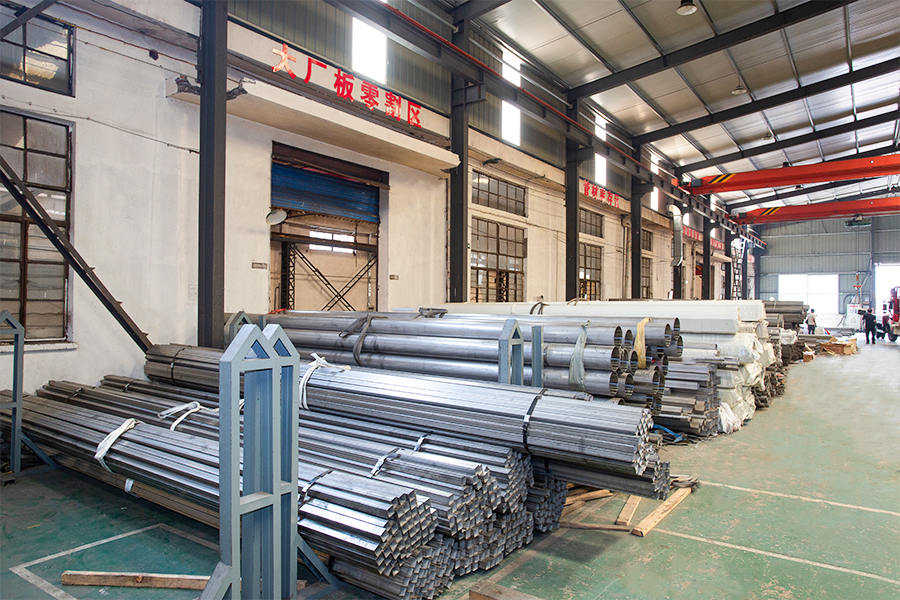
304 stainless steel pipe is one of the most widely used austenitic stainless steel products in industrial and commercial applications. It is composed primarily of iron, with approximately 18% chromium and 8% nickel, which is why it is sometimes referred to as 18-8 stainless steel. This composition gives the material its characteristic corrosion resistance, formability, and strength, making it suitable for a broad range of environments, from food processing plants to chemical facilities.
Unlike carbon steel pipes, 304 stainless steel does not require additional coating or lining to resist rust, since the chromium content forms a passive oxide layer on the surface that self-repairs when scratched or exposed to oxygen. This self-healing property is a major reason why 304 pipes remain a preferred choice even in demanding conditions where long-term durability is essential.
Key Mechanical and Chemical Properties
Understanding the physical characteristics of 304 stainless steel pipe helps engineers and buyers determine whether it meets the requirements of a specific project. The material offers a good balance of strength, ductility, and resistance to a wide temperature range.
Corrosion Resistance
304 stainless steel performs well against most oxidizing acids, atmospheric corrosion, and general moisture exposure. However, it is less resistant to chloride environments, such as seawater or heavily salted areas, where pitting corrosion can occur over time. For those conditions, 316 stainless steel, which contains molybdenum, is often recommended instead.
Temperature Tolerance
This grade maintains structural integrity across a wide temperature range, generally performing reliably from sub-zero conditions up to around 870°C for intermittent service. This makes it suitable for both cryogenic applications and moderate heat exposure in industrial piping systems.
Weldability and Formability
304 stainless steel pipes can be welded using most standard techniques, including TIG and MIG welding, without significant loss of corrosion resistance. The material is also highly ductile, allowing it to be bent, formed, or fabricated into custom shapes without cracking.
Common Pipe Schedules and Sizing Standards
304 stainless steel pipes are manufactured according to standardized schedules that define wall thickness relative to the outer diameter. Selecting the correct schedule is critical for ensuring the pipe can handle the intended pressure and flow requirements without unnecessary material cost.
| Schedule | Wall Thickness | Typical Use |
| Schedule 5S | Thin | Low-pressure fluid transport |
| Schedule 10S | Light to moderate | General plumbing and process lines |
| Schedule 40 | Standard | Most common industrial applications |
| Schedule 80 | Extra heavy | High-pressure systems |
Pipes are also classified as either seamless or welded. Seamless pipes are extruded from a solid billet and offer higher pressure ratings, while welded pipes are formed by rolling and joining flat steel plates, making them more cost-effective for lower-pressure applications.
Typical Applications of 304 Stainless Steel Pipes
Due to its versatility, 304 stainless steel pipe is used across numerous industries. Common applications include:
- Food and beverage processing equipment and transport lines
- Pharmaceutical and biotechnology manufacturing systems
- Water treatment and distribution infrastructure
- Architectural handrails, structural supports, and decorative fixtures
- Heat exchangers and general chemical processing equipment
In each of these settings, the combination of hygienic surface properties, corrosion resistance, and mechanical strength makes 304 stainless steel a dependable material choice.
304 vs 316 Stainless Steel: Which Should You Choose?
One of the most common questions when specifying stainless steel pipe is whether to choose 304 or 316. While both grades share similar mechanical properties, the key difference lies in molybdenum content, which 316 includes and 304 does not. This addition gives 316 superior resistance to chloride-induced pitting and crevice corrosion, making it the better option for marine environments, coastal installations, or applications involving saline solutions.
For most standard industrial, commercial, and architectural applications where exposure to chlorides is minimal, 304 stainless steel offers comparable performance at a lower cost, making it the more economical choice in the majority of projects.
Installation and Maintenance Best Practices
Proper installation and routine maintenance help maximize the service life of 304 stainless steel piping systems. The following practices are recommended for long-term performance:
- Use compatible fittings and avoid direct contact with carbon steel to prevent galvanic corrosion
- Clean welded joints thoroughly to remove heat discoloration, which can reduce corrosion resistance
- Inspect pipes periodically in chloride-exposed environments for early signs of pitting
- Store unused pipe sections in dry, ventilated areas to avoid surface contamination
Sourcing Considerations for Buyers
When purchasing 304 stainless steel pipes, buyers should request mill test certificates to confirm the chemical composition and mechanical properties meet ASTM A312 or equivalent international standards. It is also important to verify whether the pipe is seamless or welded, as this affects both pricing and suitable pressure ratings.
For bulk orders, working with suppliers who provide consistent surface finishes, accurate dimensional tolerances, and traceable batch documentation reduces the risk of quality variation across large projects, particularly in regulated industries such as food processing or pharmaceuticals.