

 English
 русский
 عربى
عربى 中文简体
中文简体
Content
- 1 Why 304 Stainless Steel Qualifies as the Workhorse Grade
- 2 Standards Every 304 Pipe Fittings Manufacturer Should Follow
- 3 Common Types of 304 Stainless Steel Pipe Fittings
- 4 Seamless or Welded: How Fittings Are Manufactured
- 5 What to Audit When Choosing a Manufacturer
- 6 Custom Solutions When Standard Fittings Fall Short
Whether you are designing a new processing line, upgrading an existing plant, or sourcing components for a long-running project, the quality of your pipe fittings has a direct impact on how safely and reliably the entire system performs. Among the many material options available today, 304 stainless steel remains the most widely specified grade for general industrial piping — and the manufacturer you choose matters just as much as the material itself.
As a company that combines stainless steel material supply with custom fabrication, Wuxi Chengfeng Metal Technology Co., Ltd. has spent years manufacturing and supplying 304 pipe fittings for customers across food, chemical, pharmaceutical, energy, and construction industries. In this guide, we share practical advice on selecting 304 stainless steel pipe fittings manufacturers, the standards and processes that separate good suppliers from unreliable ones, and what you should expect from a partner who truly understands the material.
Why 304 Stainless Steel Qualifies as the Workhorse Grade
304 stainless steel contains approximately 18 percent chromium and 8 percent nickel, a combination that provides excellent corrosion resistance in atmospheric, fresh water, and many mild chemical environments. It also delivers strong mechanical properties at both ambient and elevated temperatures, good formability, and dependable weldability. These characteristics explain why engineers continue to specify 304 for piping systems that handle clean process fluids, potable water, steam, and general utility services.
Compared with higher-alloy grades, 304 offers a practical balance of performance and cost. For fittings used in food and beverage processing, pharmaceutical utilities, water treatment, and light chemical service, 304 is often the first and most economical choice. When intergranular corrosion resistance after welding is a concern, the low-carbon variant 304L is preferred because it minimizes the risk of sensitization in the heat-affected zone.
Standards Every 304 Pipe Fittings Manufacturer Should Follow
Not all fittings sold under the name "304 stainless steel" are created equal. A dependable manufacturer produces fittings in accordance with recognized international standards and can provide documentation that traces each batch back to its mill source. The following specifications are the most commonly referenced for 304 pipe fittings:
- ASTM A403 — specification for wrought austenitic stainless steel pipe fittings, covering elbows, tees, reducers, and caps.
- ASME B16.9 — factory-made wrought buttwelding fittings, governing dimensional requirements and tolerances.
- ASME B16.5 and B16.47 — pipe flanges and flanged fittings, defining face types, pressure classes, and dimensions.
- ASTM A182 — forged or rolled stainless steel pipe flanges, forged fittings, valves, and parts for high-temperature service.
Material test certificates, heat numbers, and mill test reports should be available for every production lot. Beyond paper compliance, pay attention to dimensional tolerances, wall thickness uniformity, and surface finish. These small details determine whether a fitting installs smoothly and produces a sound welded joint under real site conditions.
Common Types of 304 Stainless Steel Pipe Fittings
Before comparing manufacturers, it helps to map out the fittings your system actually needs. Most piping layouts rely on a small number of basic components, yet the same type of fitting can vary considerably in wall thickness, end preparation, and dimensional accuracy depending on the supplier.
| Fitting Type | Typical Applications | Selection Notes |
|---|---|---|
| Elbow (45°, 90°, 180°) | Changing the direction of flow | Long-radius elbows reduce pressure drop; short-radius types save space |
| Tee (equal / reducing) | Splitting or combining flow streams | Equal tees maintain bore size; reducing tees handle size transitions |
| Reducer (concentric / eccentric) | Connecting pipes of different diameters | Concentric suits vertical lines; eccentric prevents trapping in horizontal lines |
| Coupling | Joining two straight pipe sections | Socket-weld and threaded types are common for smaller bores |
| Flange | Connecting pipe to valves and equipment | Raised-face is the most common; rating depends on pressure class |
| Cap | Closing the end of a pipe | Used for temporary or permanent isolation |
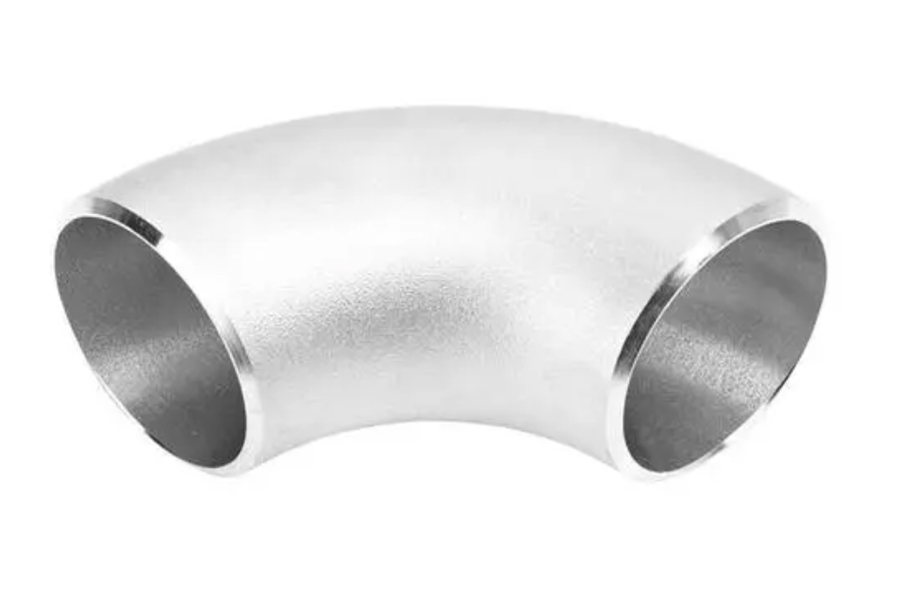 Stainless Steel Elbow Manufacturers Offering Seamless and Welded FittingsThis page details 304 stainless steel elbows in 45°, 90°, and 18° configurations, including cold bending production and flaw detection. It helps you match elbow types to pipe schedules and service conditions.View Product →
At our facility, 304 stainless steel elbows are produced in both seamless and welded executions, with optional surface finishes from pickled to polished. Whatever configuration your layout requires, the fitting should be matched carefully to the pipe schedule and the service conditions of the line.
Seamless or Welded: How Fittings Are Manufactured
Understanding how a fitting is made helps you judge whether a supplier can deliver the performance your project demands. Wrought fittings are formed from pipe, plate, or bar through hot or cold working, followed by trimming, heat treatment, and final machining. Forged fittings, by contrast, are shaped from heated solid bar stock under high pressure, which gives them a dense grain structure suited to high-pressure and high-integrity applications.
Another key consideration is whether the raw tube used to form the fitting is seamless or welded. For demanding services, seamless stainless steel pipe is frequently preferred because it has no longitudinal weld seam and offers uniform strength around the circumference. For general duties, welded pipe produced from verified coil with full weld inspection can deliver excellent value while meeting the same pressure requirements.
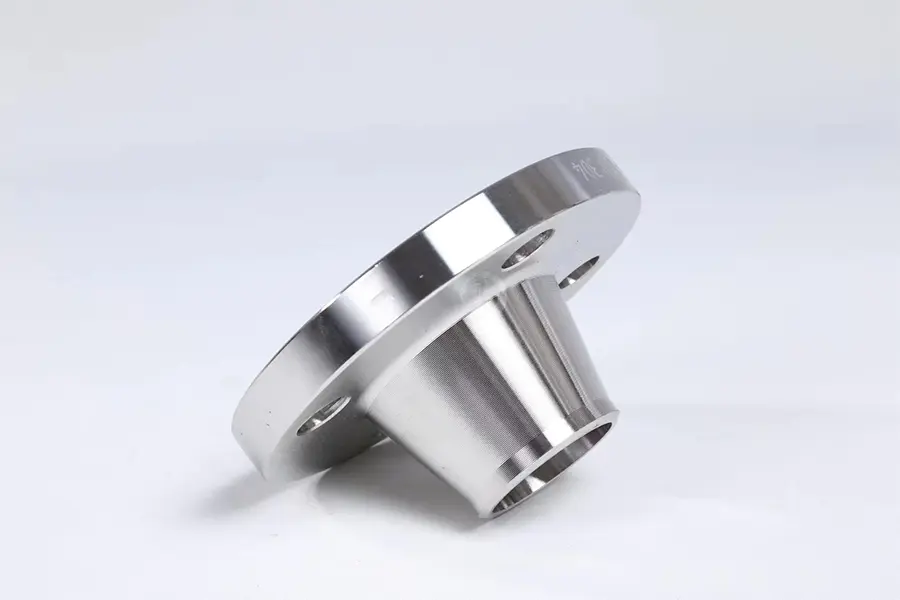 Stainless Steel Flange Manufacturers with Forging Process DetailsThis listing covers stainless steel flanges in reducing, pressure vessel, and threaded types, with free and die forging processes. It explains how annealing, pickling, and inspection ensure corrosion resistance and dimensional accuracy.View Product →
After forming, fittings typically pass through solution annealing, pickling and passivation, and dimensional inspection before release. These steps restore corrosion resistance, remove surface contamination, and confirm that the finished part matches the order. A manufacturer that can explain and control each stage of this process is far more likely to deliver consistent quality.
What to Audit When Choosing a Manufacturer
When customers evaluate our plant, the same concerns appear again and again. The checklist below reflects the areas that matter most when assessing any 304 stainless steel pipe fittings manufacturer:
- Material traceability — mill certificates with heat numbers must be available for every batch.
- Dimensional inspection — fittings should be verified against ASME and customer-specific tolerances.
- Wall thickness uniformity — critical for pressure retention and consistent weld preparation.
- Surface condition — internal and external surfaces should be free of cracks, folds, and excessive roughness.
- Weld quality for welded fittings — full penetration, no porosity, and proper weld profile.
- Pressure testing and documentation — inspection reports, certificates, and packing lists ready for shipment.
Manufacturers with in-house inspection teams and formal quality procedures make it much easier to satisfy project requirements. A tour of our workshop or a review of our technical documentation can quickly show whether the supplier has the depth you need. We encourage customers to examine our manufacturing technology and quality control methods in detail before placing an order.
Custom Solutions When Standard Fittings Fall Short
Every so often, a project requires something that is not available in standard catalogues. Non-standard bending angles, oversized tees, heavy wall thicknesses, unusual end preparations, and large-diameter components all fall outside the range of routine fittings. In these situations, working with a manufacturer that also controls its own material supply gives you a clear advantage.
Because we operate both as a stainless steel raw material supplier and as a fabrication workshop, we can manage the entire chain — from material selection through forming, welding, heat treatment, and final inspection. Our engineering team reads customer drawings closely, and our experienced welders and fitters handle complex assemblies with confidence. This integrated approach shortens lead times and reduces the risk of miscommunication that often appears when a project shuffles between separate material vendors and processing shops.
Stainless Steel Pipe Fittings Manufacturers Covering Full Product RangeThis page presents a complete range of stainless steel pipe fittings, including elbows, flanges, tees, and reducers. It highlights the manufacturer's integrated supply and fabrication, supporting custom batches and technical advice for industrial lines.View Product →
Whether you need a small batch of custom 304 elbows or a complete set of fittings for an industrial line, we are prepared to support the job with technical advice and dependable delivery.
A reliable 304 stainless steel pipe fittings manufacturer does more than cut, form, and weld steel. They understand material standards, control quality at every stage, document their work, and help you avoid surprises during installation and long-term service.
If you are currently sourcing 304 stainless steel pipe fittings, elbows, flanges, tees, reducers, or custom-fabricated components, we would welcome the opportunity to discuss your specifications. Send us your drawings and project details — our engineering and production teams are ready to provide material expertise, manufacturing experience, and dependable delivery from our facility.