

 English
 русский
 عربى
عربى 中文简体
中文简体
Content
- 1 What Are 304 Stainless Steel Pipe Fittings?
- 2 Key Properties That Matter in Piping Systems
- 3 Common Types of 304 Stainless Steel Pipe Fittings
- 4 304 vs 316: How to Choose
- 5 Industrial Applications of 304 Stainless Steel Pipe Fittings
- 6 Matching Pipes and Fittings: Seamless vs Welded
- 7 Custom Fabrication for Non-Standard 304 Pipe Fittings
- 8 Working with a Reliable 304 Supplier
At Wuxi Chengfeng Metal Technology, we have spent years supplying stainless steel products to industrial buyers around the world. One product family we handle every day is 304 stainless steel pipe fittings. These parts may be smaller than the pipelines they connect, but they determine whether a system stays leak-free, safe under pressure, and easy to maintain. In this guide, we share practical knowledge about 304 stainless steel pipe fittings, including material properties, common types, selection factors, and application advice from our workshop experience.
What Are 304 Stainless Steel Pipe Fittings?
304 stainless steel pipe fittings are components used to join, redirect, reduce, or close stainless steel piping. The 304 grade is an austenitic stainless steel containing roughly 18 percent chromium and 8 percent nickel. This combination provides good corrosion resistance, excellent formability, and dependable weldability. Fittings made from 304 are available in many forms, including elbows, tees, reducers, couplings, unions, caps, and flanges. They can be produced as seamless or welded parts, and they share the same basic performance characteristics as 304 pipe, which makes it easier to design a complete line with consistent mechanical and corrosion behavior.
When we talk about 304 fittings, we are usually referring to components made to recognized piping standards. Dimensional standards such as ASME B16.9 for butt-welding fittings and ASME B16.5 for flanges help ensure that elbows, tees, reducers, and flanges align correctly with the pipe. Wall thickness schedules such as Schedule 10, 40, and 80 also need to match the pipe so that the welded joint carries the expected pressure load.
Key Properties That Matter in Piping Systems
Corrosion Resistance
304 stainless steel forms a passive oxide layer on its surface thanks to the chromium content. This layer resists oxidation and many mild chemical environments. In clean water, food processing, atmospheric exposure, and many neutral process fluids, 304 fittings provide long service life. After welding or mechanical damage, the oxide layer re-forms naturally when the surface is exposed to oxygen, provided the area is kept clean and free from contamination.
Mechanical Strength and Temperature Range
304 offers a good balance of strength and ductility. It handles moderate pressure loads and performs well in many services from low temperatures up to about 870 degrees Celsius for intermittent exposure. For continuous high-temperature service, the practical upper limit is lower. This range covers most standard industrial pipework, and the material remains tough at low temperatures, making it useful in cold environments as well.
Weldability and Formability
Field welders and factory fabricators appreciate 304 because of its predictable welding behavior. It can be joined by TIG, MIG, or common arc welding methods. The grade also bends and forms well, which allows manufacturers to create tight-radius elbows and custom pipe configurations. For heavy welded sections, the low-carbon version 304L is often used to reduce the risk of sensitization and weld decay.
Common Types of 304 Stainless Steel Pipe Fittings
Pipe fittings are selected according to the direction, size, and connection method required by the system. The table below summarizes the most common 304 fitting types we supply and their typical roles.
| Fitting Type | Typical Function | Common Forms |
|---|---|---|
| Elbow | Changes flow direction | 45-degree, 90-degree, long radius, short radius |
| Tee | Branches or combines flow | Equal tee, reducing tee |
| Reducer | Connects different pipe sizes | Concentric, eccentric |
| Coupling | Joins two straight pipe sections | Full coupling, half coupling |
| Flange | Connects pipe to valves or equipment | Weld neck, slip-on, socket weld, blind |
| Cap | Closes the end of a pipe | Threaded, welded, socket weld |
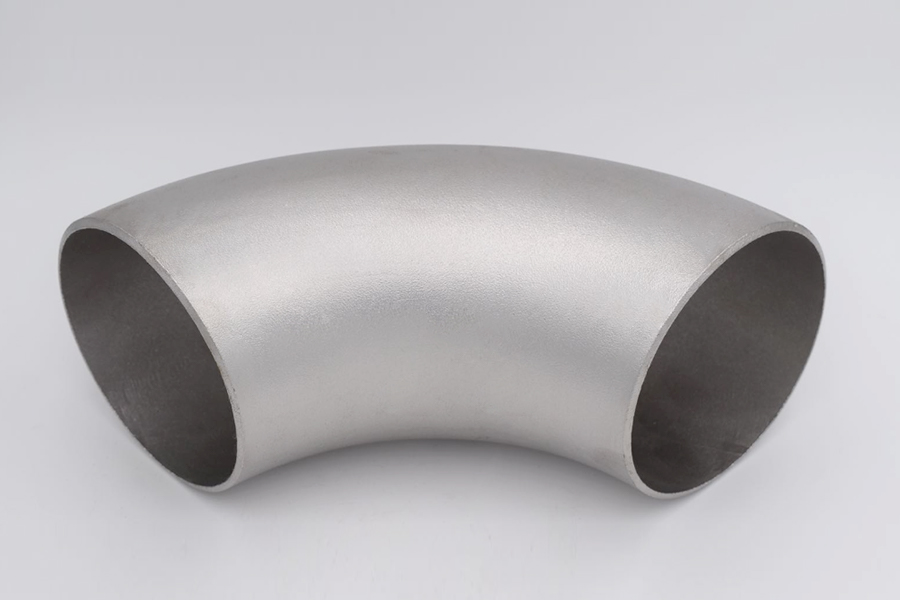
Elbows are among the most widely used 304 fittings. A 90-degree elbow redirects flow, while a 45-degree elbow produces a gentler turn. Long-radius elbows reduce friction and keep pressure drop lower. If you need a standard elbow for a new line or a replacement, our range covers common sizes and schedules.
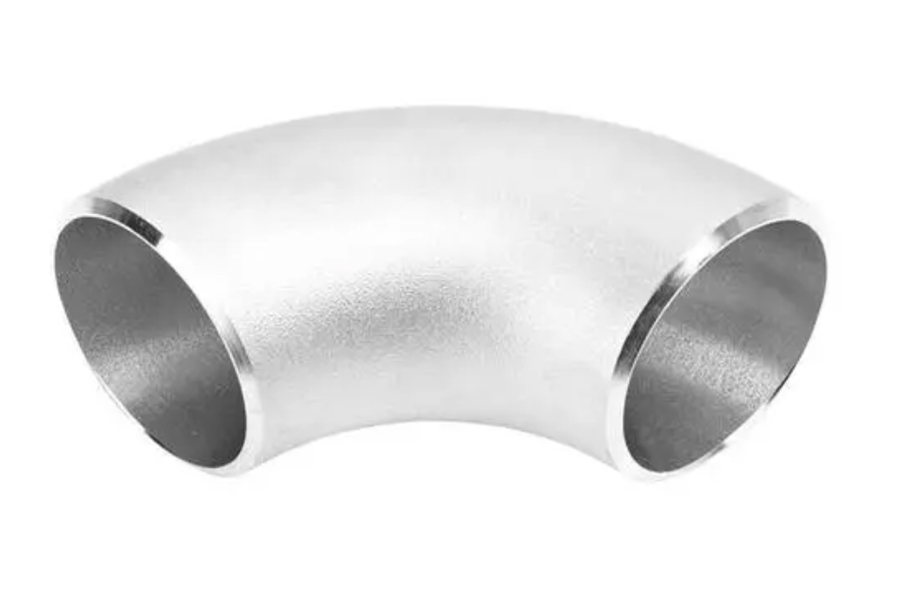 304 and 316 Stainless Steel Elbows in Various Angles and SizesThis product page details stainless steel elbows including 45, 90, and 18 degree options, with strengths like corrosion resistance and suitability for industrial piping. Useful when choosing a fitting for changing flow direction.View Product →
Flanges provide a removable connection point between piping, valves, pumps, and equipment. A flange can be welded, threaded, or slipped over the pipe end. Flanges are essential for systems that require regular inspection or disassembly. Standard options include weld neck, slip-on, socket weld, and blind flanges.
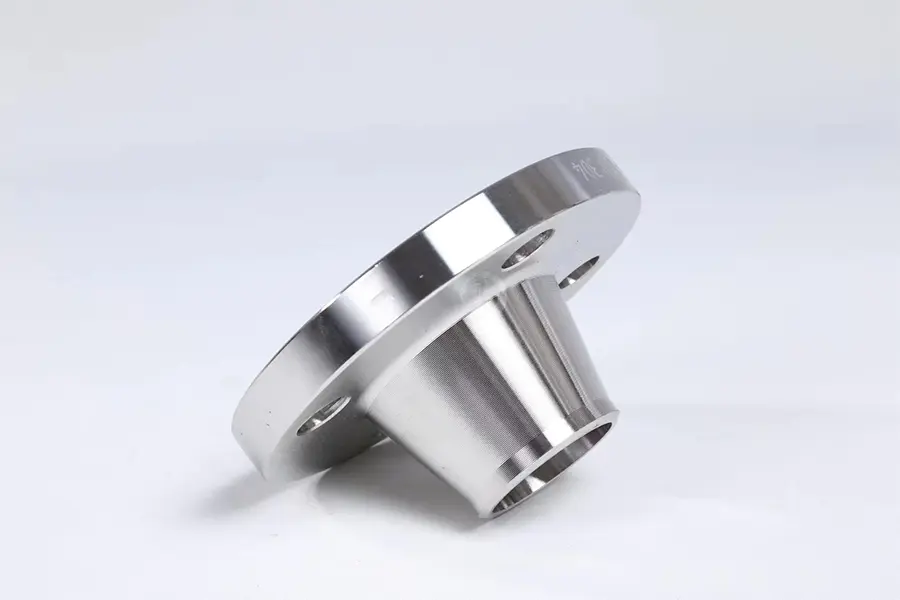 Stainless Steel Flanges for Reliable Pipe ConnectionsExplore stainless steel flanges available in reducing, pressure vessel, and threaded types. They provide strong, leak-resistant joints for valves and equipment, making them important for systems needing inspection or disassembly.View Product →
304 vs 316: How to Choose
For many industrial projects, 304 is the default option. But if your fluid contains chlorides or your site is near saltwater, 316 may be a better choice. The table below summarizes the differences.
| Property | 304 | 316 |
|---|---|---|
| Alloying additions | Chromium and nickel | Chromium, nickel, and molybdenum |
| Molybdenum content | None | 2 to 3 percent |
| Corrosion resistance | Good in fresh water and food media | Better in chloride and marine environments |
| Typical applications | General industry, food, water | Chemical processing, marine, pharmaceutical |
| Relative cost | Lower | Higher |
In most food, beverage, water, and general processing lines, 304 provides reliable service and a lower material cost. If the system handles seawater, strong chlorides, or aggressive acids, a 316 fitting is usually worth the additional investment. Our team often helps buyers compare these grades before they commit to a full piping order.
Industrial Applications of 304 Stainless Steel Pipe Fittings
304 stainless steel pipe fittings appear in almost every sector that moves a liquid, gas, or powder. We have supplied them for projects ranging from simple water lines to more complex processing skids. Typical applications include:
- Food and beverage processing, where cleanability and corrosion resistance are important.
- Water treatment and distribution systems.
- Chemical and pharmaceutical plants that handle mild acids and cleaning agents.
- Oil, gas, and petrochemical facilities for utility and instrument lines.
- Construction and architectural installations, including handrails and structural pipework.
Even in powder handling systems, stainless steel pipe fittings connect conveying lines and allow direction changes. The grade’s smooth surface and resistance to rust make it a practical choice whenever product purity and long service life are part of the specification.
Matching Pipes and Fittings: Seamless vs Welded
A fitting can only perform well when it is matched with the right pipe. We supply 304 stainless steel pipe in both seamless and welded forms. Seamless pipe is often specified for high-pressure, hygienic, or high-integrity lines. Welded pipe is a more cost-effective option for large diameters and moderate service conditions. When you order fittings, it is important to match the grade, outer diameter, wall thickness, and pressure rating with the pipe. This avoids stress concentrations at the joints and simplifies welding.
 Seamless 304 Stainless Steel Pipe with Customizable DimensionsThis seamless pipe page lists a wide range of outer diameters and wall thicknesses, with hot-rolled and cold-drawn processes. Ideal for high-pressure or hygienic lines, and must be matched with fittings for proper installation.View Product →
Before placing an order, check the pipe schedule and the fitting dimension. A Schedule 40 fitting will not have the same wall thickness as a Schedule 10 fitting, even if the outer diameter is the same. Standardizing these details across the entire line reduces installation errors and makes maintenance easier.
Custom Fabrication for Non-Standard 304 Pipe Fittings
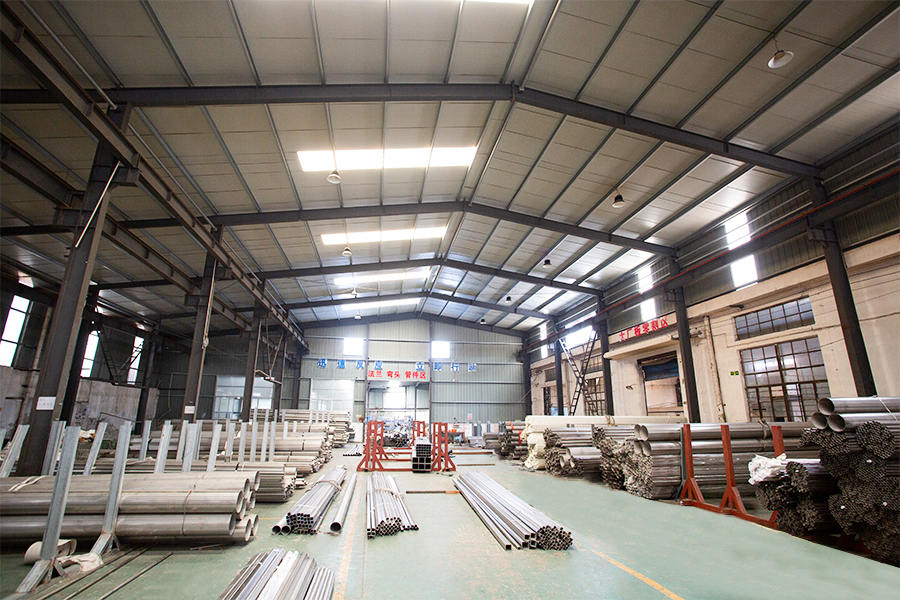
Although standard fittings cover most installations, some projects require non-standard sizes, unusual bend radii, or special end preparations. As a manufacturer and trading company, we can support custom work. Our workshop handles pipe bending, welding, plate rolling, CNC machining, and assembly. We have interpreted customer drawings to produce custom bends, custom flanges, cyclone ducts, mixing equipment, and other stainless steel components. Having our own material warehouse also shortens lead times because we can pull matching material from stock instead of waiting for mill deliveries.
Custom work usually starts with a drawing, a sample, or a clear description of the operating conditions. Our engineers review the dimensions and suggest a practical manufacturing route. This is especially helpful when the required fitting is outside standard ASME dimensions or when the project needs a non-standard surface finish.
Working with a Reliable 304 Supplier
Choosing the right supplier is as important as choosing the right grade. Wuxi Chengfeng Metal Technology Co., Ltd. combines material supply with manufacturing capability. Our material warehouse normally holds around 20,000 tons of stainless steel coils, giving us supply flexibility. We also operate a quality inspection team that checks dimensions, surface condition, and marking before shipment. We serve listed companies, state-owned enterprises, and foreign-funded clients, and we take a practical, engineering-first approach to every inquiry. To see how we combine material supply with manufacturing, you can review our technology page.
If you want to compare options for an upcoming pipeline project, contact our team with your drawings and specifications. We are happy to recommend a practical solution based on the service conditions and your delivery expectations.
304 stainless steel pipe fittings are a proven, versatile choice for industrial piping. The key is to understand your service conditions, select the correct fitting type and wall thickness, and work with a supplier that can deliver consistent quality. We hope this guide helps you plan a safer, more efficient system. When you are ready to move forward, we would be glad to discuss material options, standards, and delivery schedules.