

 English
 русский
 عربى
عربى 中文简体
中文简体
Content
What Cold Rolled Flat Plate Is
Cold rolled flat plate is steel that has been processed at or near room temperature, passed through a series of rollers to reduce thickness and achieve a precise, uniform gauge without the use of additional heat during the final rolling stage. This process begins with hot rolled steel that has already been cooled to room temperature, which is then further rolled to refine its thickness, surface finish, and mechanical properties. Because no additional heat is applied during cold rolling, the steel undergoes strain hardening, a process where the metal's internal grain structure becomes compressed and elongated, resulting in increased strength and hardness compared to its hot rolled counterpart.
Cold rolled flat plate is valued across manufacturing industries for its tighter dimensional tolerances, smoother surface finish, and improved mechanical properties, making it a preferred choice for applications requiring precision and consistent quality.
How Cold Rolled Flat Plate Is Produced
Understanding the production sequence clarifies why cold rolled steel exhibits different mechanical and surface characteristics compared to hot rolled steel, even when both begin from the same base material.
Starting Material Preparation
Cold rolling begins with hot rolled steel coil or plate that has already cooled to room temperature. Before cold rolling, this material typically undergoes a pickling process to remove surface scale and oxidation that formed during the earlier hot rolling stage, leaving a clean surface for further processing.
Cold Reduction Rolling
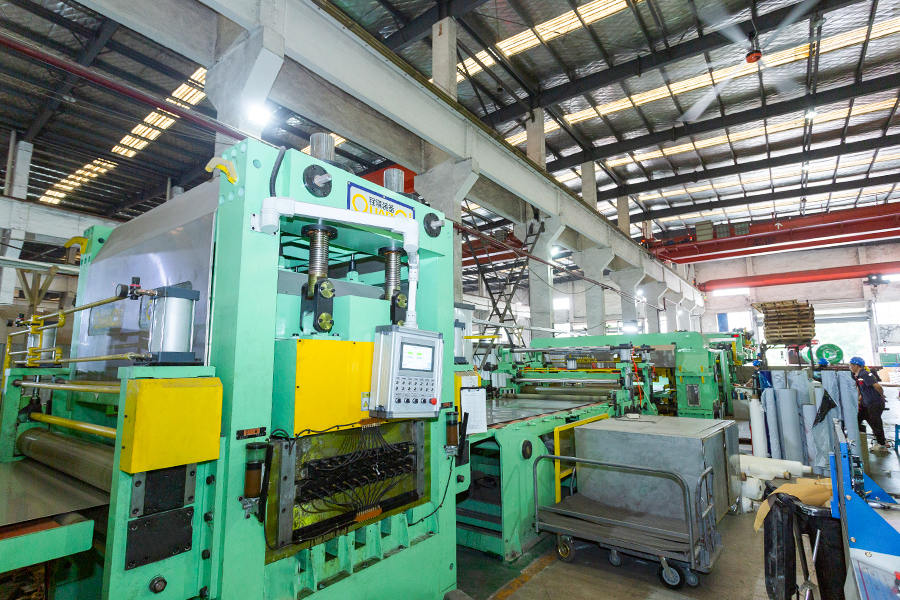
The cleaned steel is then passed through a series of rollers at room temperature, progressively reducing its thickness while increasing its length. This mechanical compression realigns the internal grain structure of the metal, increasing tensile strength and hardness through strain hardening, though it also reduces the material's overall ductility if not addressed through subsequent processing.
Annealing and Temper Rolling
Because cold rolling significantly hardens the steel, many products undergo an annealing process afterward, where the material is heated in a controlled furnace environment to restore some ductility without fully reversing the dimensional benefits gained from cold rolling. A final light pass called temper rolling is often applied afterward to improve surface flatness and achieve the desired mechanical properties for the intended application.
Cold Rolled vs Hot Rolled Flat Plate
Choosing between cold rolled and hot rolled flat plate depends heavily on the specific dimensional, mechanical, and cost requirements of a given application.
| Factor | Cold Rolled Flat Plate | Hot Rolled Flat Plate |
| Surface Finish | Smooth, often with slight sheen | Rougher, with mill scale present |
| Dimensional Tolerance | Tight, precise thickness control | Looser, more variation expected |
| Strength and Hardness | Higher due to strain hardening | Lower, more ductile as-produced |
| Cost | Higher due to added processing | Lower, fewer processing steps |
Key Advantages of Cold Rolled Flat Plate
The additional processing involved in cold rolling delivers several practical benefits that justify its higher cost for many precision manufacturing applications.
- Tighter thickness tolerances that reduce the need for secondary machining before final assembly
- Smoother surface finish that improves paint adhesion and reduces surface preparation time
- Increased strength and hardness, allowing for thinner gauge material in some load-bearing applications
- Improved flatness compared to hot rolled plate, which can warp slightly as it cools unevenly
- Better suitability for precision stamping, forming, and welding operations requiring consistent material behavior
Common Applications of Cold Rolled Flat Plate
Cold rolled flat plate is widely used in industries where dimensional precision and surface quality directly affect product performance or appearance. In automotive manufacturing, it is commonly used for body panels, brackets, and structural components where consistent thickness and strong paint adhesion are essential. Appliance manufacturing also relies heavily on cold rolled steel for external panels and housings, since its smooth finish reduces the need for extensive surface preparation before painting or coating. Additionally, cold rolled flat plate is frequently used in furniture manufacturing, precision machinery components, and electrical enclosures, where tight tolerances support proper fit and function during assembly.
Factors to Consider When Sourcing Cold Rolled Flat Plate
When selecting cold rolled flat plate for a specific application, buyers should evaluate several specifications beyond just thickness. The steel grade determines baseline mechanical properties such as yield strength and hardness, with common grades including low carbon steel for general forming applications and higher carbon or alloy grades for applications requiring greater strength. Surface finish classifications, ranging from matte to bright finishes, should be matched to the intended use, particularly for components with visible surfaces or specific coating requirements. Buyers should also confirm flatness tolerances and edge condition specifications with suppliers, since these factors can significantly affect downstream processing steps such as stamping, laser cutting, or welding accuracy.