

 English
 русский
 عربى
عربى 中文简体
中文简体
Content
What Is Cold Rolled Flat Plate
Cold rolled flat plate is a type of steel product manufactured by passing hot rolled steel through rollers at room temperature, a process that refines the material's thickness, surface finish, and mechanical properties compared to its hot rolled counterpart. Unlike hot rolling, which occurs at high temperatures above the metal's recrystallization point, cold rolling is performed after the steel has cooled, allowing manufacturers to achieve tighter dimensional tolerances, smoother surfaces, and enhanced strength through strain hardening.
Because of these improved characteristics, cold rolled flat plate is widely used in industries that require precise dimensions and a clean surface finish, including automotive manufacturing, appliance production, construction, and metal fabrication. Understanding how cold rolled flat plate is produced and where its properties offer the greatest advantage can help engineers and buyers select the right material for their specific application.
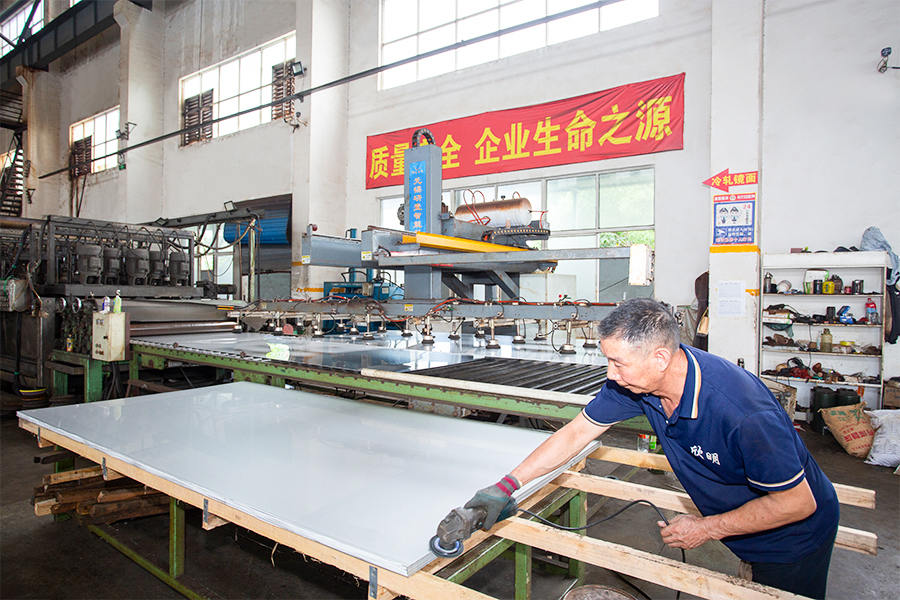
How Cold Rolled Flat Plate Is Manufactured
The production of cold rolled flat plate begins with hot rolled steel, which is first cleaned through a pickling process to remove surface scale and impurities. Once cleaned, the steel is fed through a series of rollers at room temperature, gradually reducing its thickness while increasing its length. This cold working process compresses the steel's grain structure, resulting in a harder, stronger material with a noticeably smoother and more reflective surface than hot rolled steel.
After the initial cold rolling passes, the plate often undergoes annealing, a controlled heating and cooling process that relieves internal stresses introduced during rolling and restores some ductility to the material. Depending on the intended application, additional finishing steps such as tempering, leveling, or surface coating may also be applied to achieve the exact specifications required by the end user.
| Processing Stage | Purpose | Result |
| Pickling | Removes surface scale and oxides | Clean base metal surface |
| Cold Rolling | Reduces thickness at room temperature | Increased strength and smooth finish |
| Annealing | Relieves internal stress | Improved ductility and workability |
| Finishing | Tempering, leveling, or coating | Precise dimensions and surface quality |
Key Properties of Cold Rolled Flat Plate
Cold rolled flat plate offers a distinct set of mechanical and surface properties that set it apart from hot rolled steel, making it a preferred choice for applications where precision and appearance matter.
Dimensional Accuracy
The cold rolling process produces plates with tighter thickness tolerances and flatter surfaces compared to hot rolled steel, making it easier to achieve consistent, precise results in manufacturing processes that require close-fitting components.
Surface Finish
Cold rolled flat plate typically has a smooth, slightly oily surface finish free of the scale found on hot rolled steel, making it well suited for parts that will be painted, plated, or otherwise finished without extensive surface preparation.
Increased Strength
The strain hardening that occurs during cold rolling increases the yield and tensile strength of the steel, though this can also reduce ductility slightly compared to hot rolled material, a tradeoff that annealing helps to balance.
Common Grades and Standards
Cold rolled flat plate is produced according to various industry standards and grades, each specifying particular chemical compositions and mechanical properties suited to different applications. Familiarity with these standards helps buyers select material that meets the requirements of their specific project.
- Commercial quality grades are general-purpose options suited for parts that will undergo moderate forming, such as brackets and enclosures.
- Drawing quality grades offer improved formability for components requiring deeper draws or more complex shapes, such as automotive body panels.
- Structural quality grades provide higher strength levels for load-bearing applications where mechanical performance is a primary concern.
- Special killed steel grades minimize internal gas porosity, offering excellent surface quality for parts with strict cosmetic requirements.
Applications of Cold Rolled Flat Plate
The precision and surface quality of cold rolled flat plate make it a preferred material across a wide range of manufacturing industries. In the automotive sector, it is used extensively for body panels, structural reinforcements, and interior components, where its smooth finish and consistent thickness support high-quality painting and assembly processes.
In appliance manufacturing, cold rolled flat plate is commonly used for the exterior panels of refrigerators, washing machines, and ovens, where its clean surface allows for attractive finishes without extensive pre-treatment. It is also widely used in furniture manufacturing, electrical enclosures, and precision metal parts that require tight tolerances, such as brackets, fasteners, and machine components.
Cold Rolled vs Hot Rolled Flat Plate
Choosing between cold rolled and hot rolled flat plate depends heavily on the specific requirements of a project, including budget, surface finish needs, and dimensional tolerance requirements. The table below highlights the primary differences between the two processing methods.
| Characteristic | Cold Rolled Plate | Hot Rolled Plate |
| Surface Finish | Smooth, slightly oily | Rougher, with mill scale |
| Dimensional Tolerance | Tighter, more precise | Looser, less precise |
| Strength | Higher due to strain hardening | Lower, more ductile |
| Cost | Higher due to added processing | Lower, less processing required |
Tips for Selecting Cold Rolled Flat Plate
When sourcing cold rolled flat plate for a manufacturing project, it is important to specify the exact grade, thickness tolerance, and surface finish required to ensure compatibility with downstream processes such as welding, forming, or painting. Reviewing mill test certificates can confirm that the material meets the chemical composition and mechanical property requirements specified by the relevant industry standard.
Buyers should also consider the plate's intended forming requirements, as higher-strength cold rolled grades may require adjusted tooling or additional annealing steps to achieve the desired shape without cracking. Consulting with suppliers about specific application needs, including expected load conditions and environmental exposure, can help ensure the selected cold rolled flat plate performs reliably throughout its service life.
Final Thoughts
Cold rolled flat plate remains a critical material across numerous manufacturing industries thanks to its precise dimensions, smooth surface finish, and enhanced strength. By understanding how it is produced, what grades are available, and how it compares to hot rolled alternatives, engineers and buyers can confidently select the right cold rolled flat plate for their specific application, ensuring both performance and cost-effectiveness in their final products.